Our second stop in Jerusalem-the last full day of our trip.
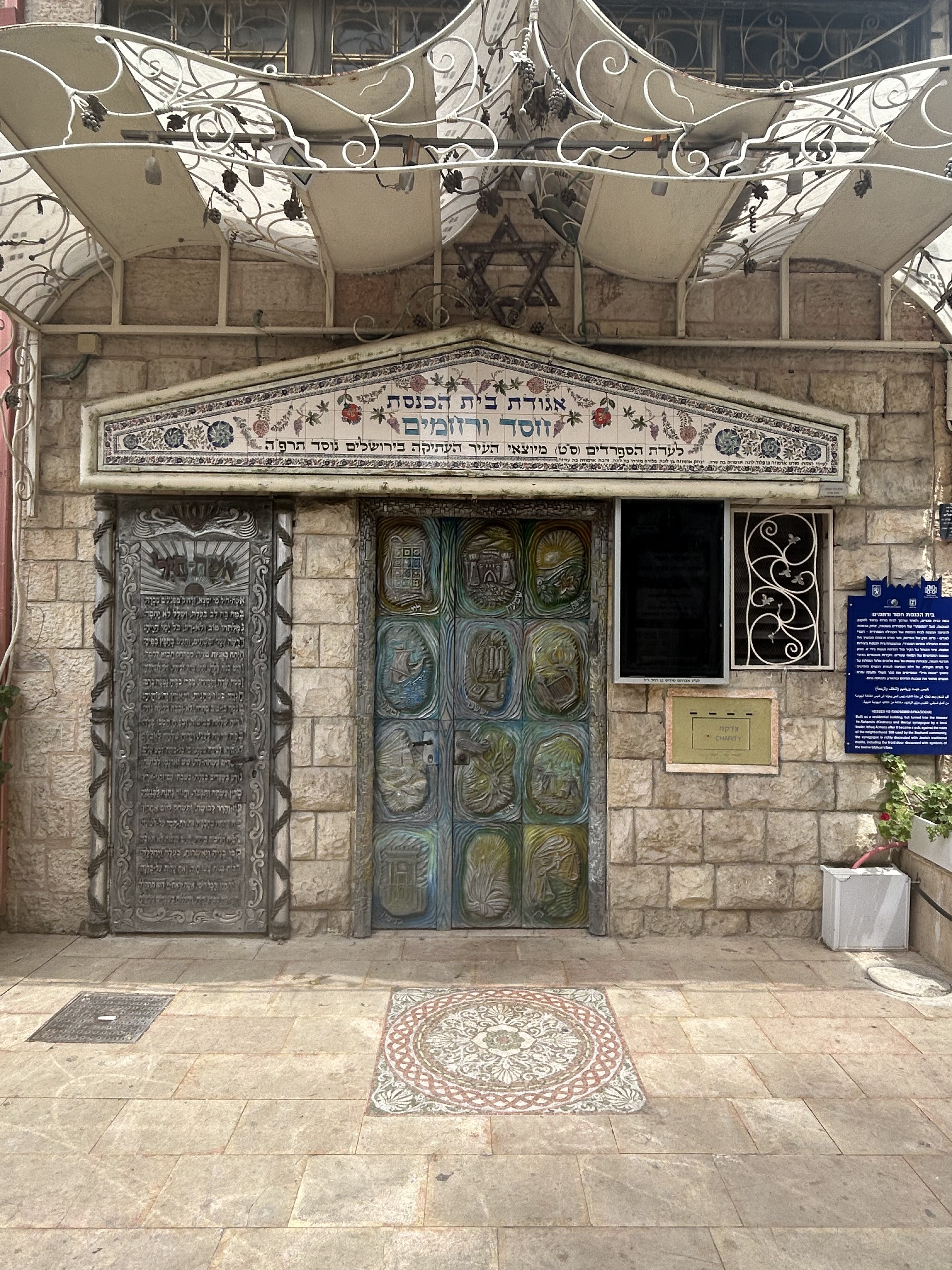
We spoke with Yuri, a recent friend of our Rabbi.
Yuri talked about life in the days just after October 7th. There was chaos. The soldiers didn’t have bulletproof vests or helmets. But civilians-parents-friends-couldn’t just start buying them on the internet. They needed quality control–to know how to get equipment that work or it would have been even more dangerous.
https://www.jpost.com/israel-news/article-824160
And they needed 100 kit bags for $50,000. Yuri just started calling people and eventually got them. He had them shipped to the airport and one of his nephews knew a custom agent so they delivered them straight to Gaza.
Yuri’s project now focuses on working with refugees and wounded soldiers. Improved medical services is saving more lives, but there is an unintended consequence. Ambulance services and the network of preparation and readiness are getting better, the way Mogen David is handling blood transfusions is getting faster, people are surviving in battle at higher rates and people are getting to the hospital more quickly, in 17 minutes. But all of this also means that soldiers are serving with greater injuries, and leaving service with more severe, long-lasting injuries. More amputees.
Yuri has been working with refugees from another war for a way to set up a refugee camp on the border. He has had a summer camp for Jewish kids of all religious persuasions and secular children. He is now expanding and combining these projects to respond to the moment. He is working with soldiers who have lost limbs or are learning to walk with a prosthesis or need a wheelchair. Many of them have had to return to live with their parents again–people who have been independent, served in the military, likely shell-shocked or depressed, and who don’t want to be adults dependent on their parents.
He is recruiting them to be counselors and to help build a bigger camp space.
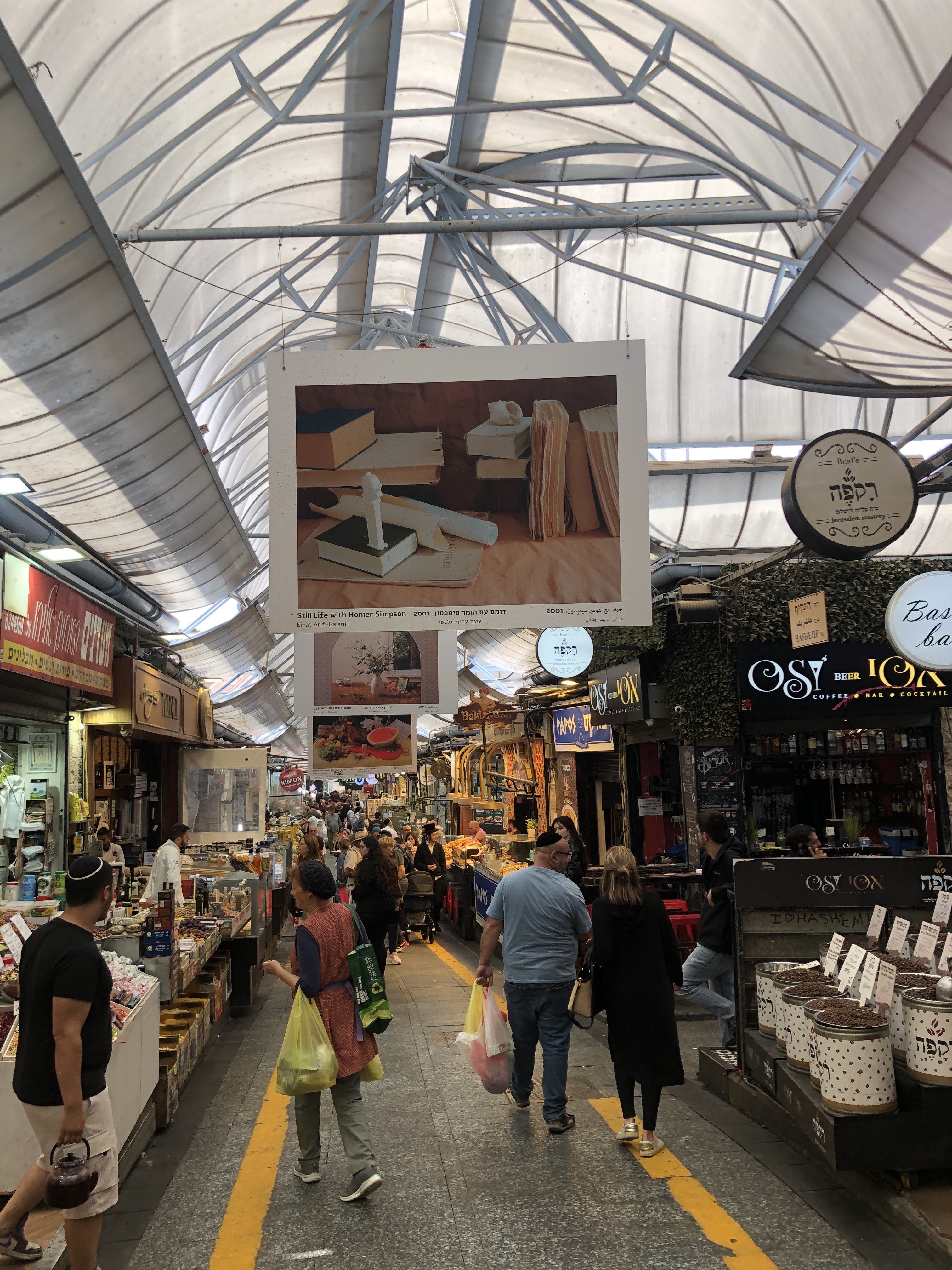
Next stop: Machane Yehuda marketplace for lunch and contributing to the Israeli economy
Judaica and some delicious quinoa sweet potato salad, and great coffee. There was one stall dedicated just to dried fruit you add water to for a variety of hot and cold teas.
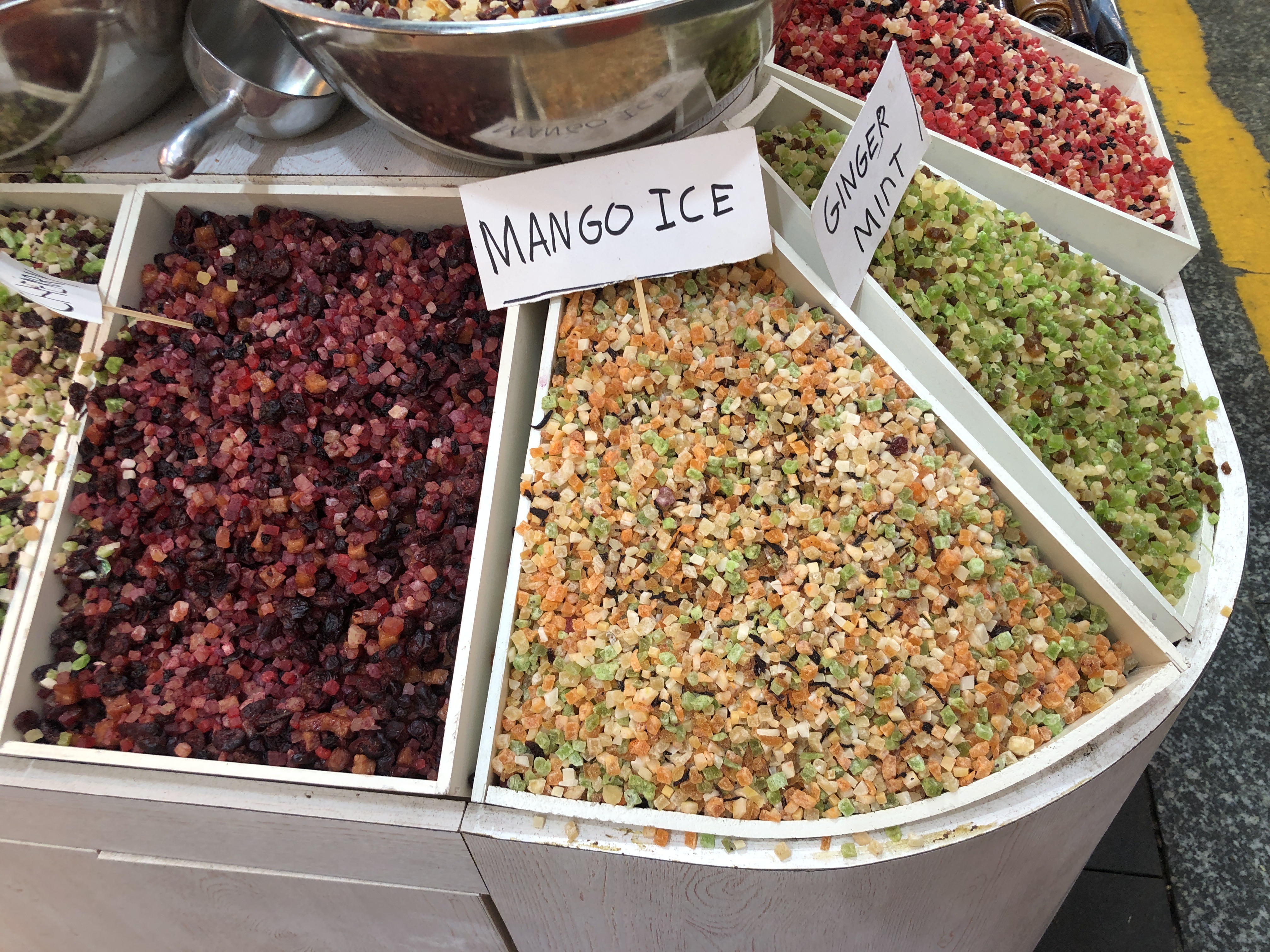
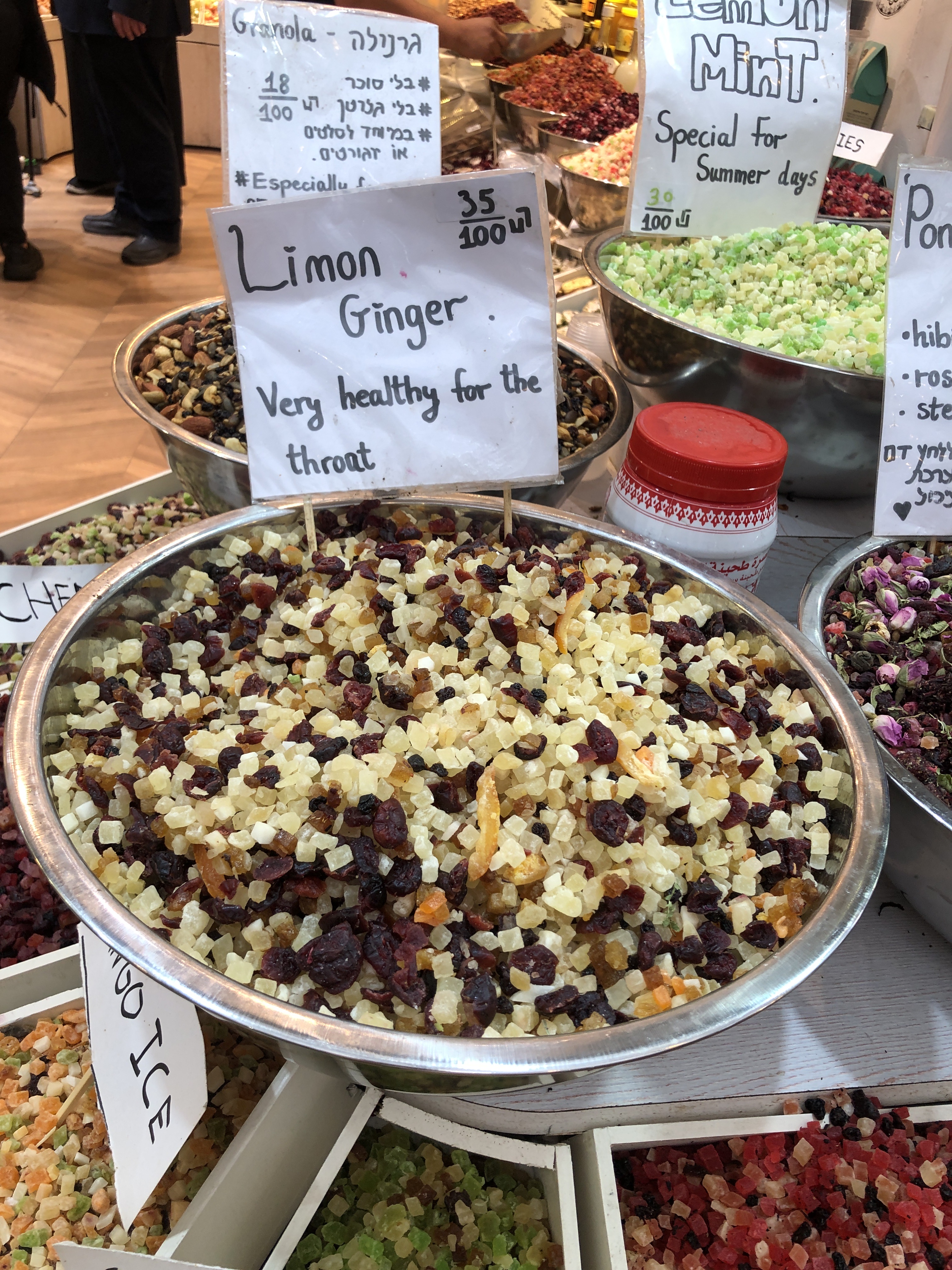
I also wonder how anyone can make a living since so many people are selling the same thing and when we were there it seemed pretty empty. I presume that on other days the place is packed. Or when they are not under terrorist attack.
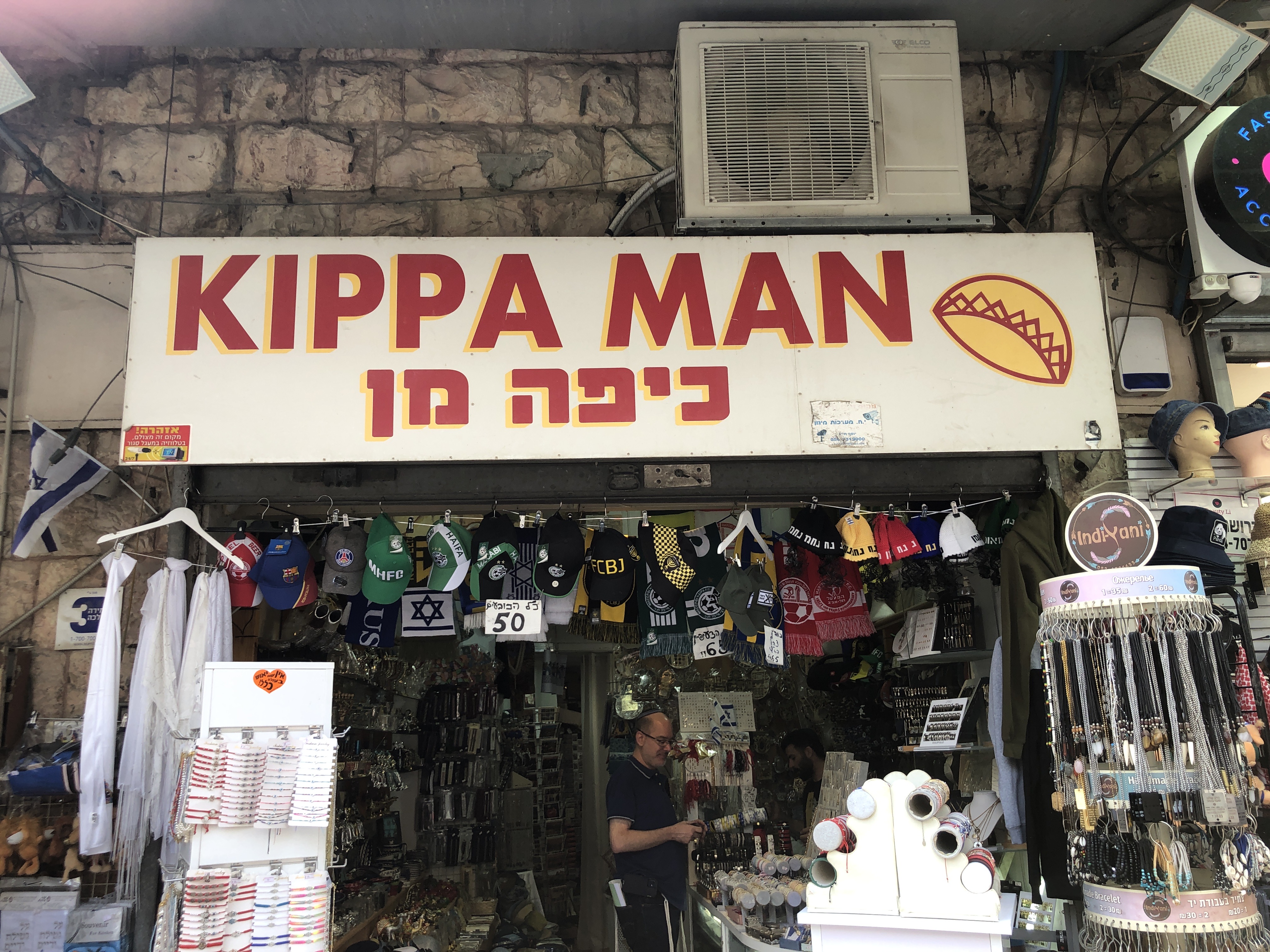
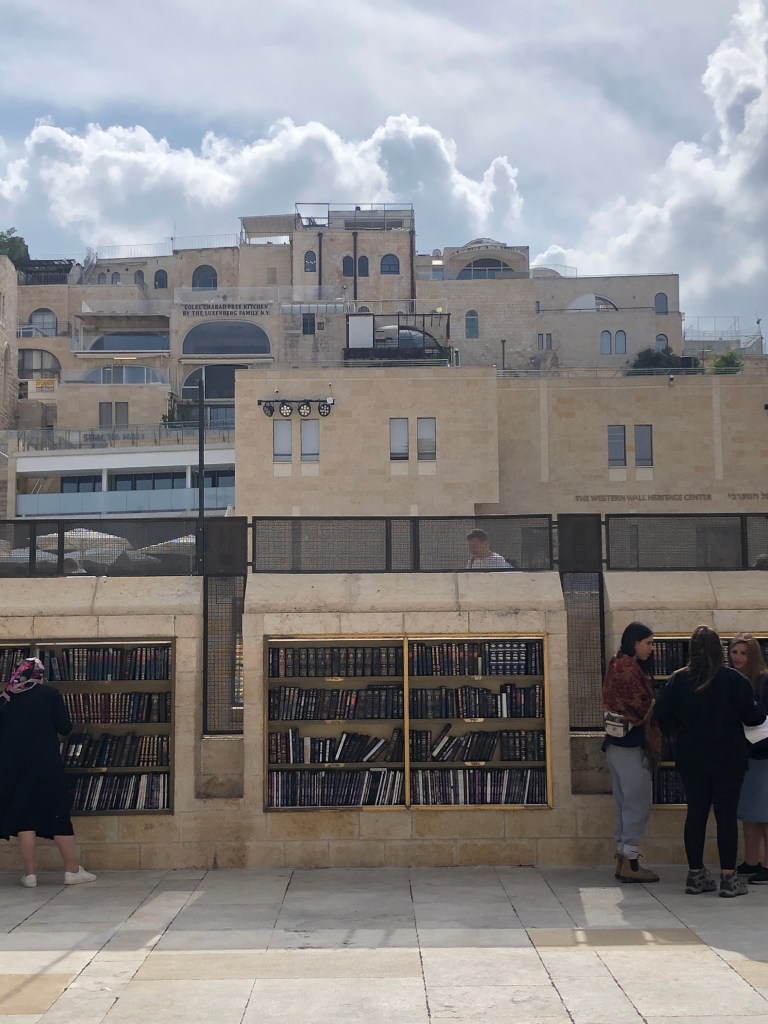
Next Stop: Jewish Quarter and the Western Wall
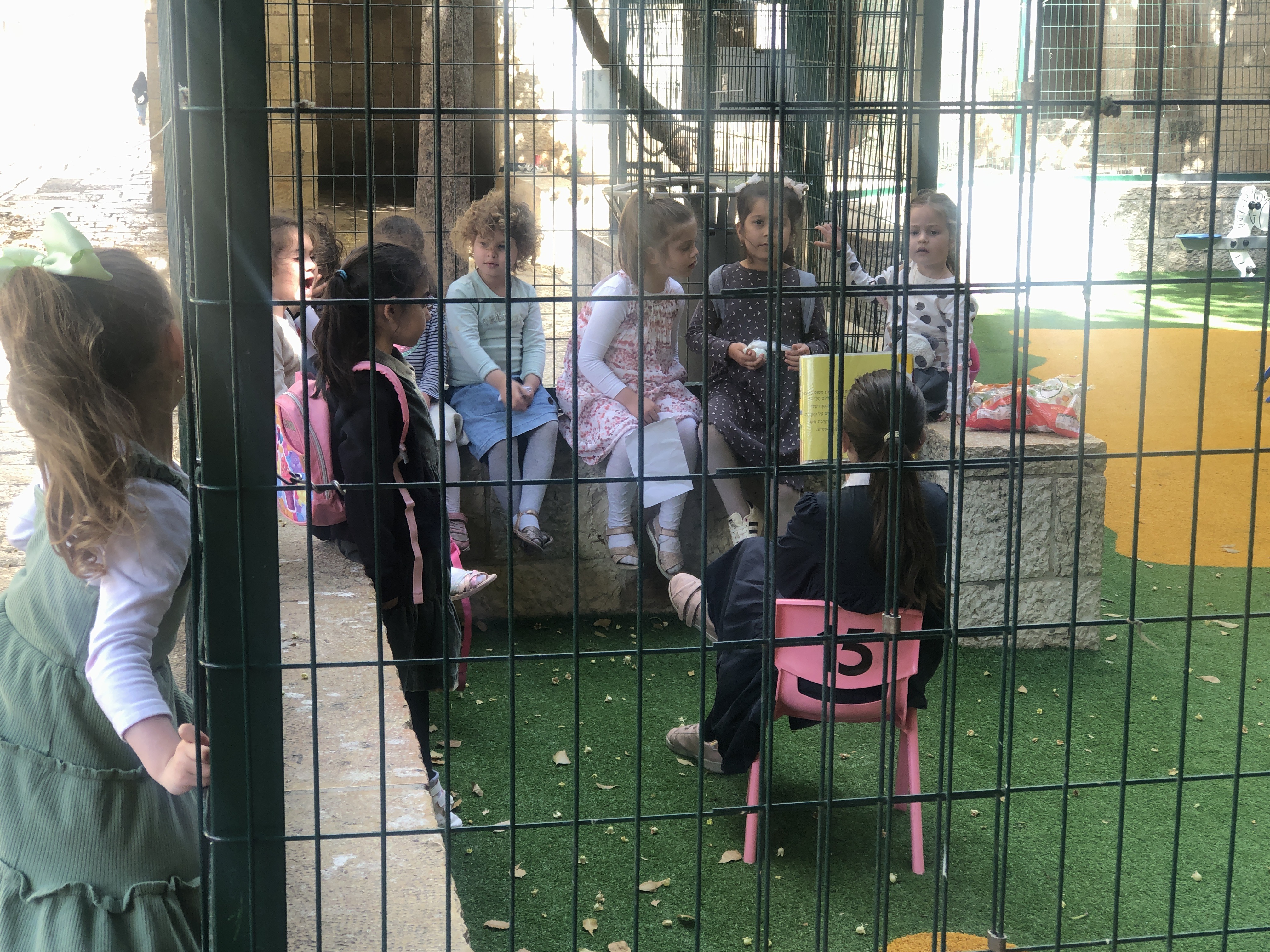
It’s hard to describe my feelings as we approached the Jewish Quarter of Jerusalem. Two Thousand years of history and connection to the place. Hearing stories from my grandparents. Tel Aviv is a fairly new city, and the kibbutzim we visited also new. The sense of walking on ancient land with centuries of history was fantastic and heavy. Also remember the poem about Jerusalem? I loved seeing the little kids.
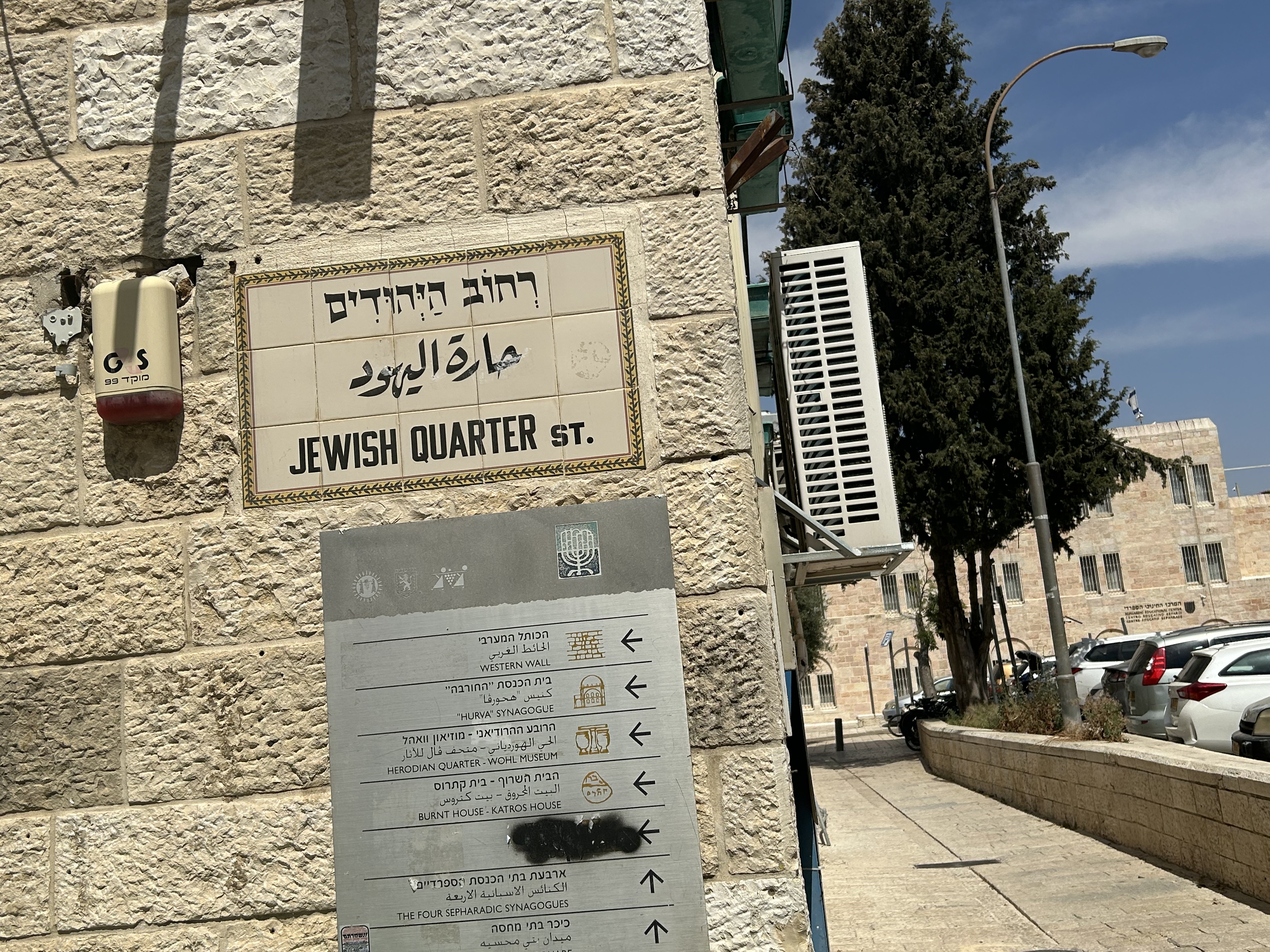
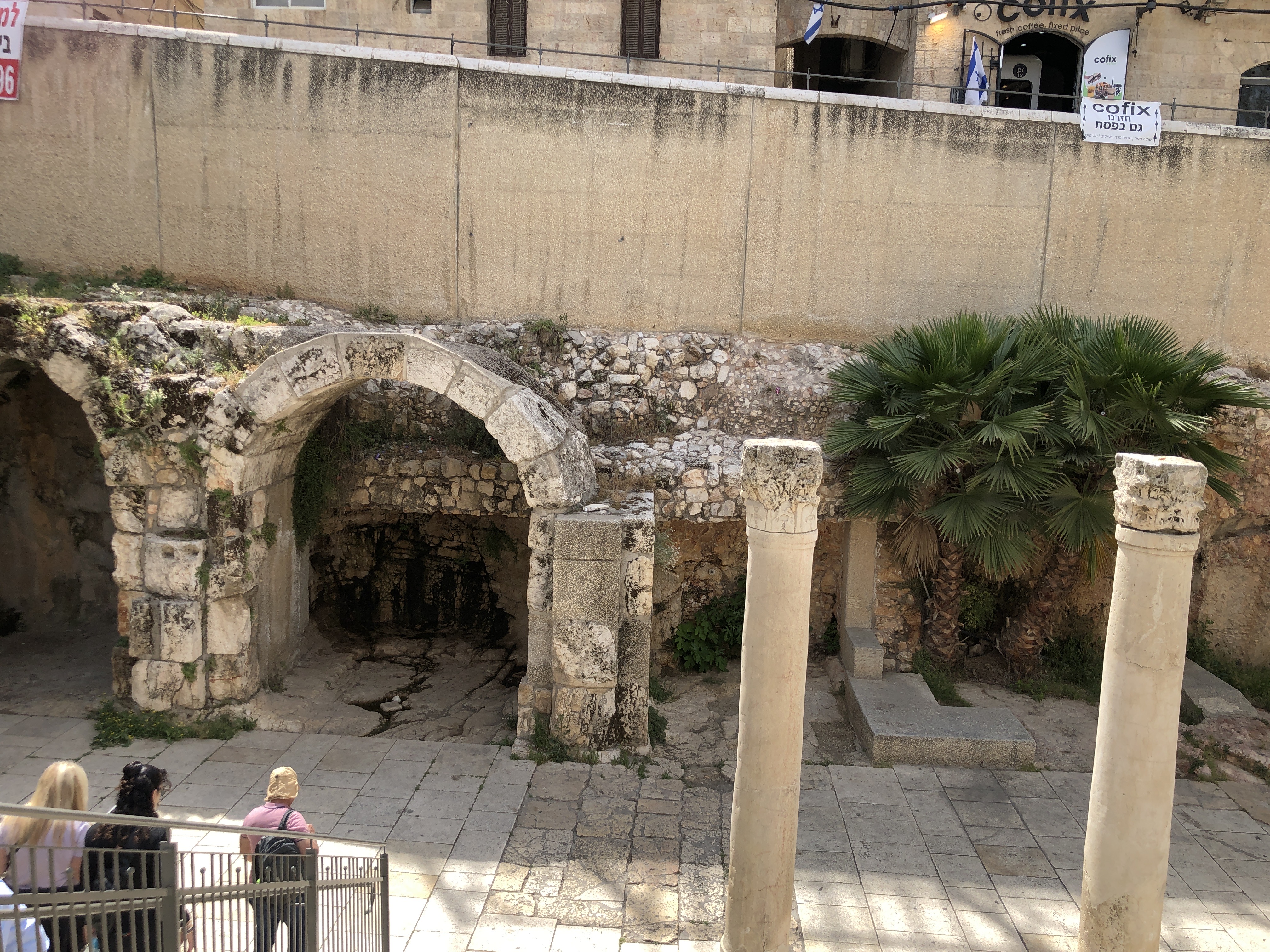
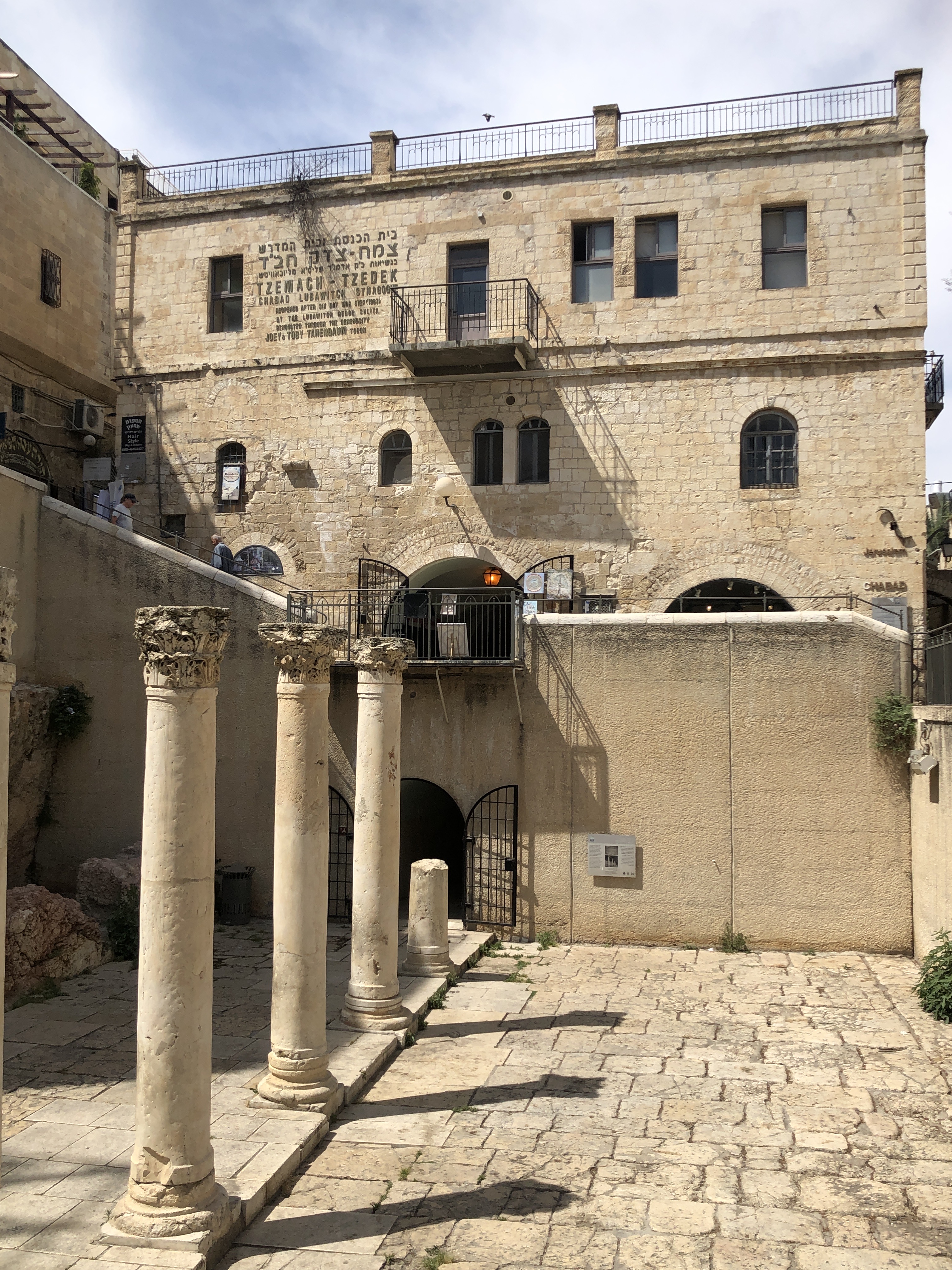
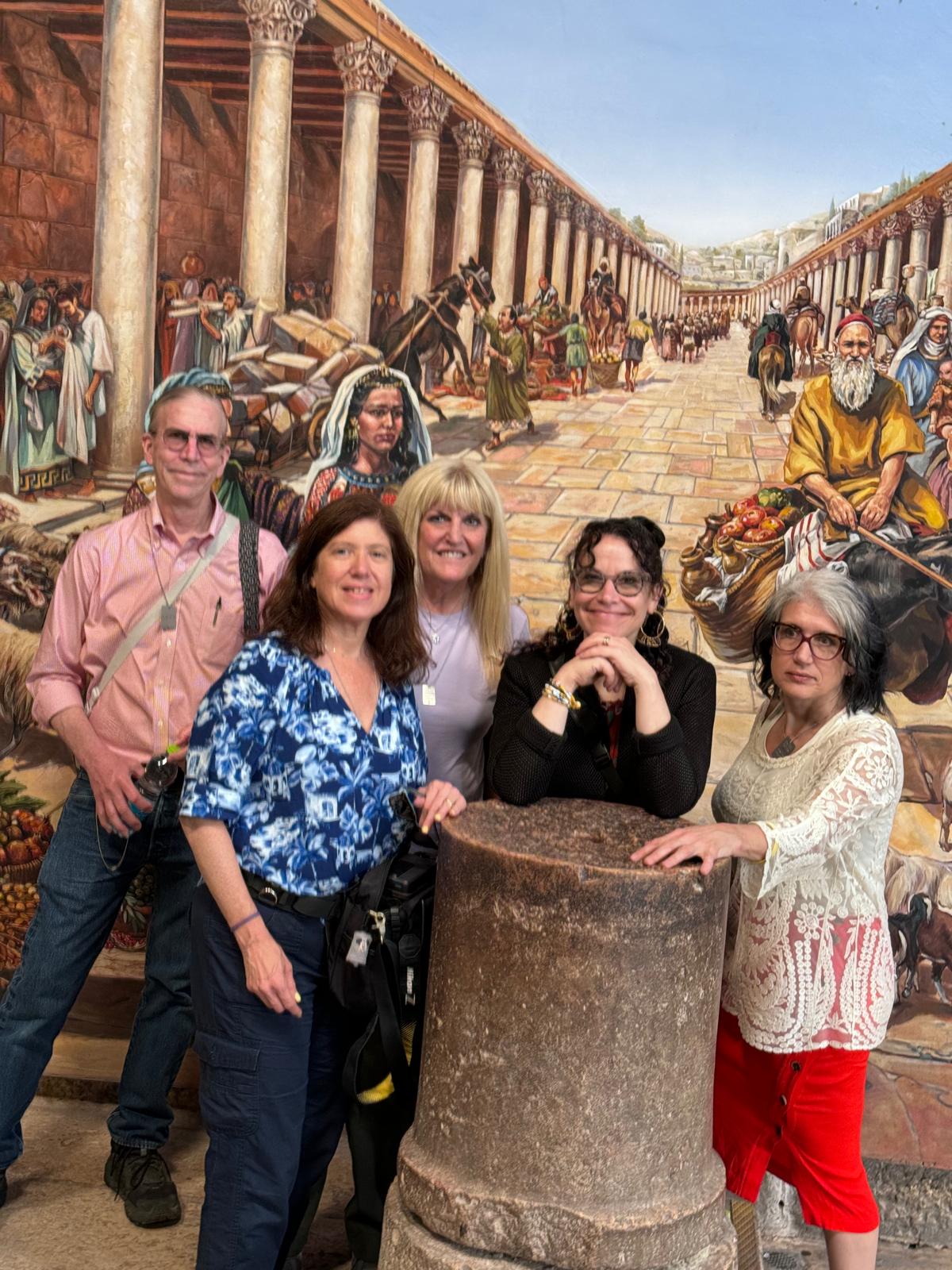

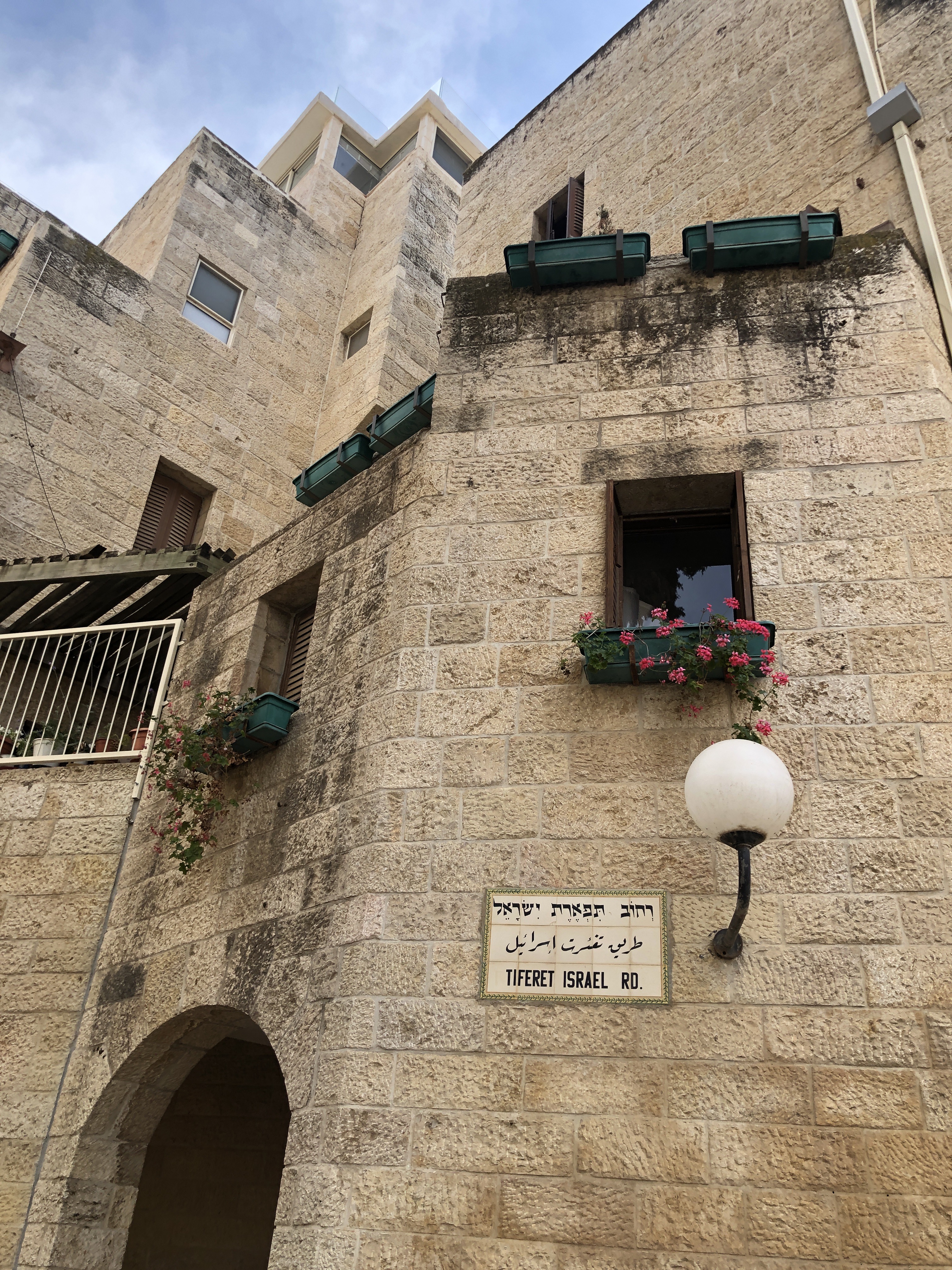
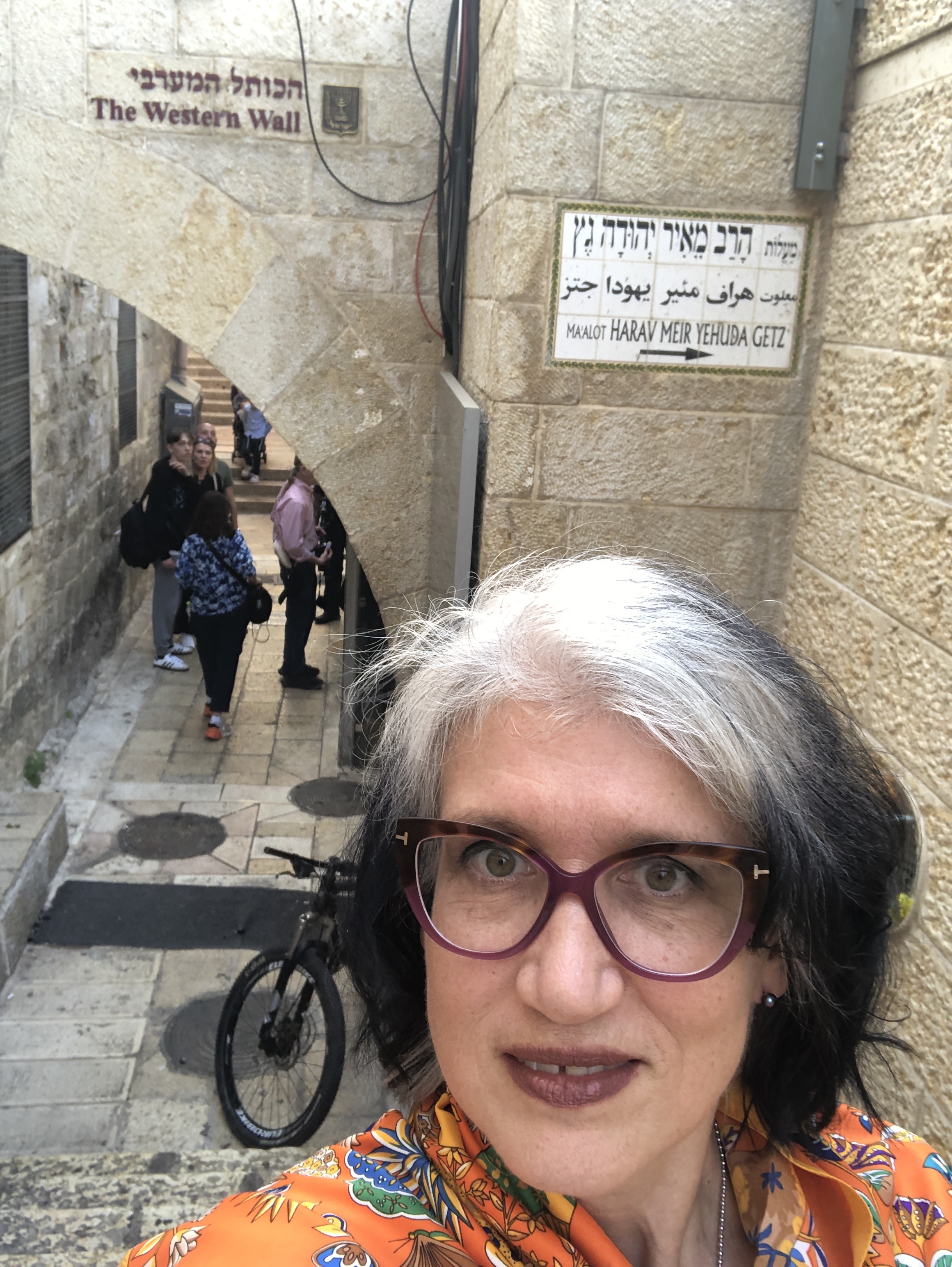
We walked from the ancient Jewish Quarter to the Wall. Yishay told us to look at our feet and not to look up until he told us to.
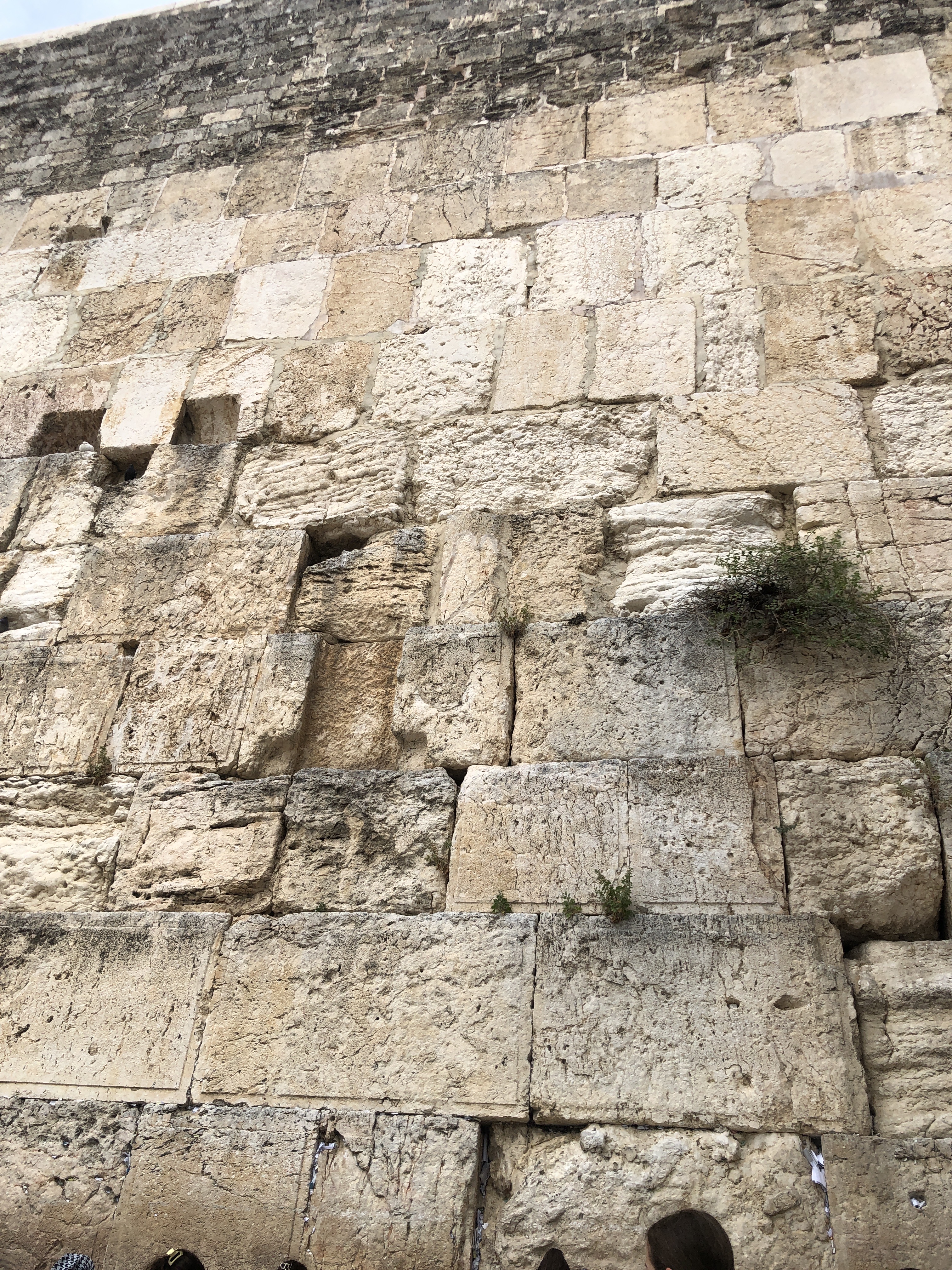
I put my hand up because I don’t trust myself not to look. When I removed my hand this is what I saw:
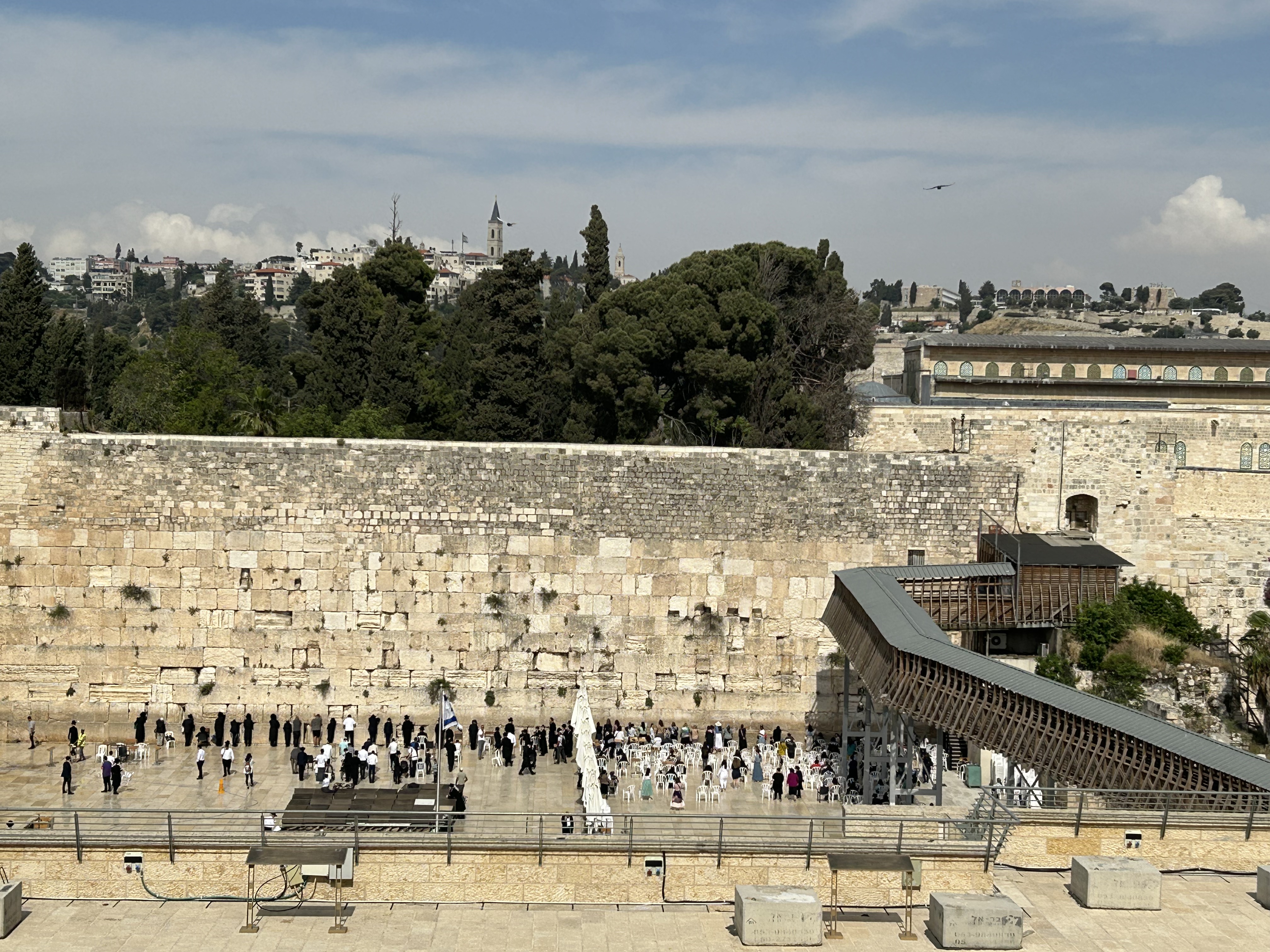
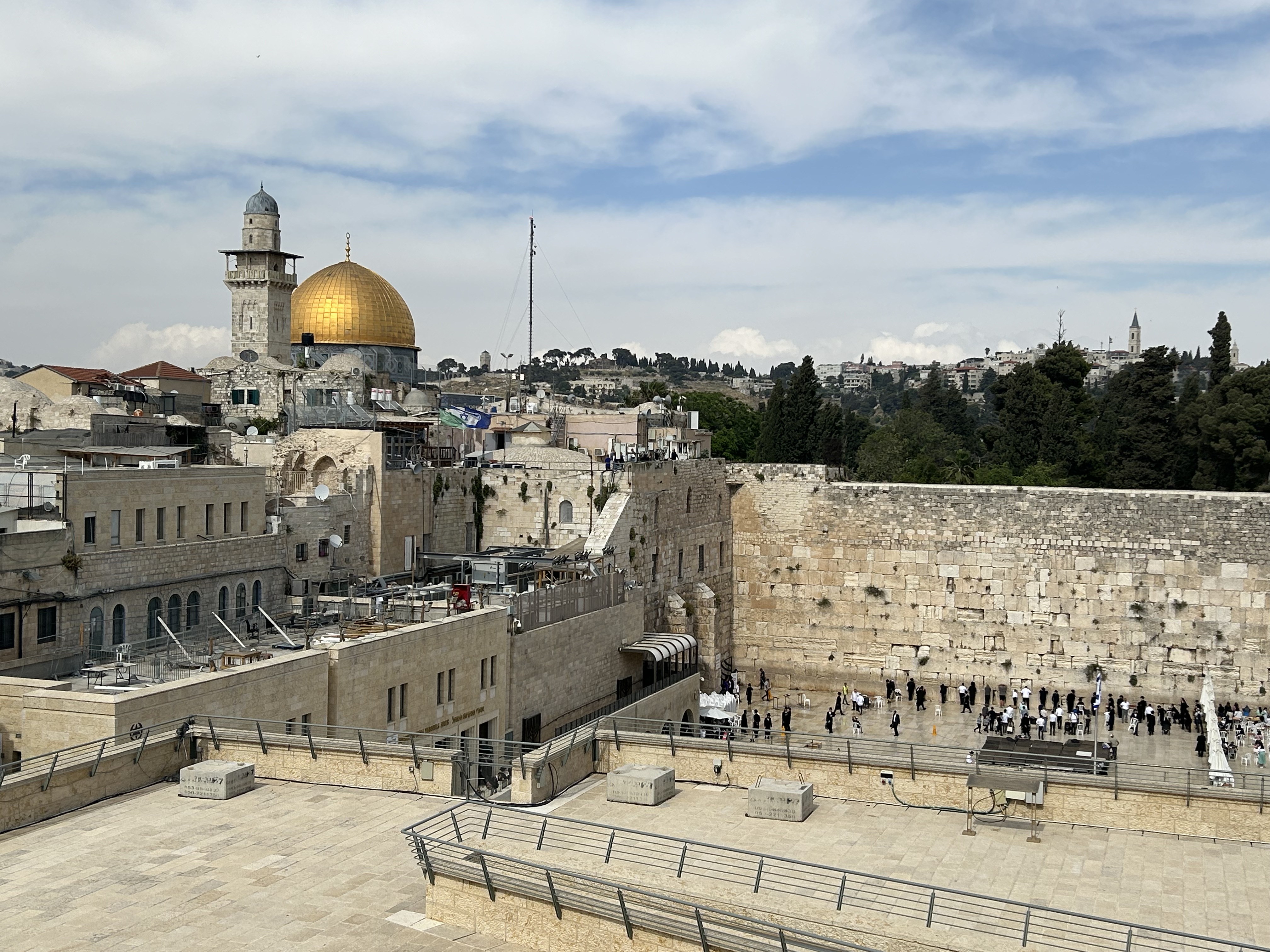
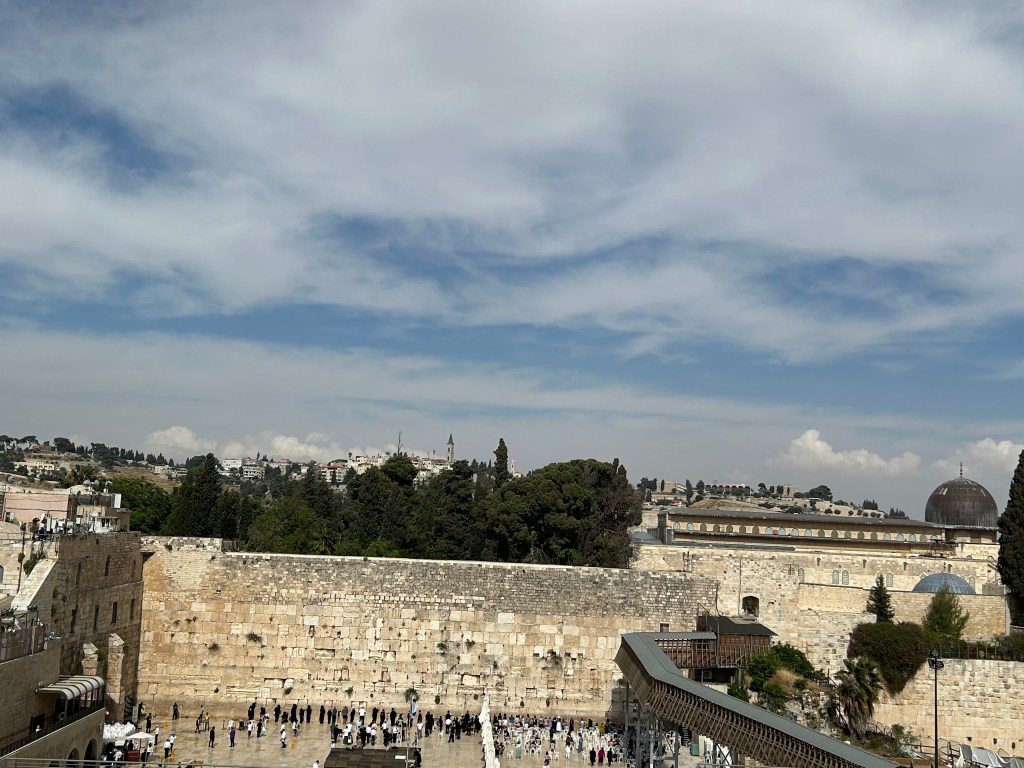
We call it the Western Wall. I grew up hearing it called the Wailing Wall, and didn’t realize the history of the term. The British called it that as they observed Jews angry and sad at the wall, pressing their lips to it and praying and crying, starting in the 1860s. In 1967 after the war Jews felt they didn’t have to mourn at the wall any more, that it was a time for celebration to be reunited and have a homeland once again.
More history than you want to know about the Wall:
Around 19 BCE Herod the Great began a massive expansion project on the Temple Mount. In addition to fully rebuilding and enlarging the Temple, he artificially expanded the platform on which it stood, doubling it in size. Today’s Western Wall formed part of the retaining perimeter wall of this platform.
King Herod built this wall in 20 BCE during an expansion of the Second Temple. When the Romans destroyed the temple in 70 CE, the support wall survived. For hundreds of years, people prayed in the small area of the wall that could be seen. In 1967, following the Six Day War, Israelis dug below the ground of the wall, exposing two more levels. They also cleared the area around the wall to create the Western Wall Plaza that visitors see today.
Yishay also said when I asked about the debate about the women’s section of the Western Wall being smaller, not to engage with that issue on your first visit. Engage next time. Which reminds me, when I go back, perhaps meet with women organizing around feminism and the Western Wall in December.
https://womenofthewall.org.il/
https://womenofthewall.org.il/mission/
But I completely agreed with him, and with the Rabbi who occasionally admonished us (OK, advised us 🙂 not to try to apply concepts of Left/Right, Feminism/Sexism, etc….not to superimpose our US sensibilities, but to open our minds and listen and learn to the Israeli context, history, culture and views. I am still learning and listening.
Lisa reminded us that Arabs in the Muslim quarter in the upper left of the photo, below, across the way throw stones at Jews praying at the Wall.
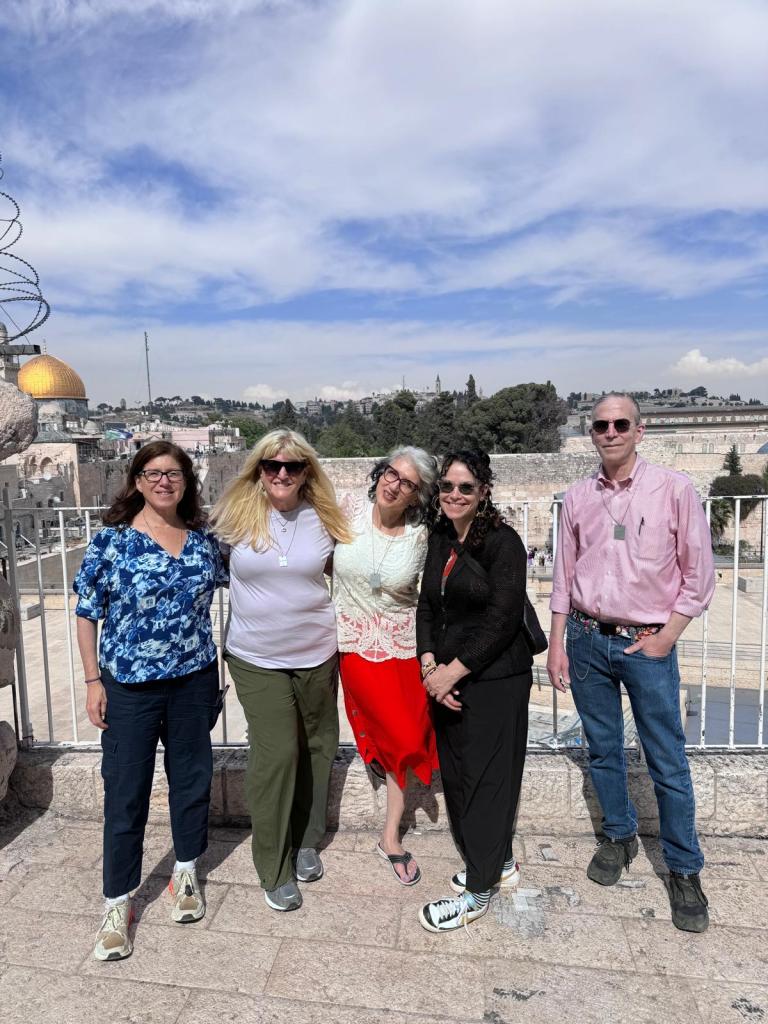
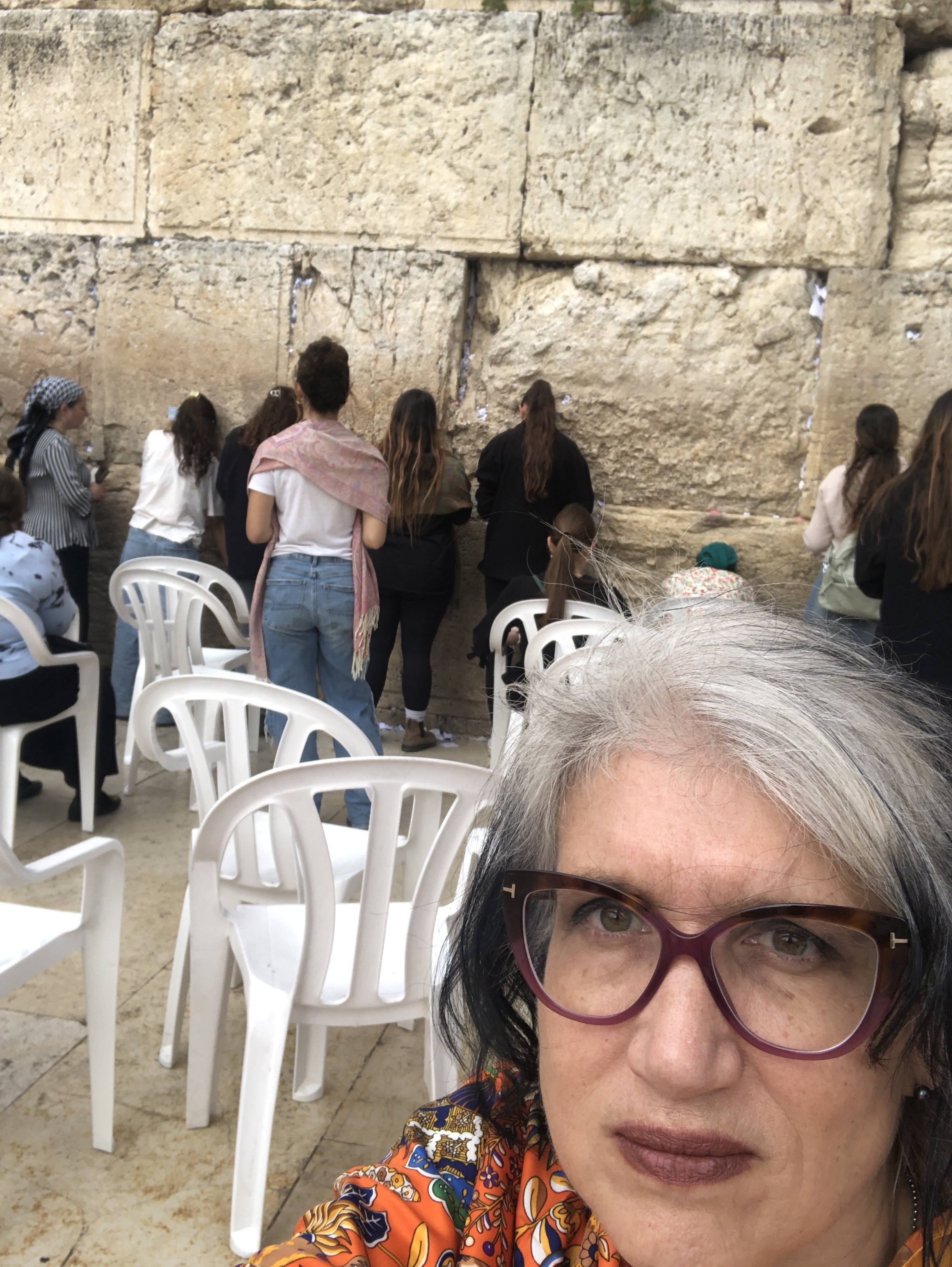
There’s a custom to put prayers or wishes in the Wall.
We all wrote wishes and then went down to separate men and women’s sections to leave our wishes in the wall. Brad said his Rabbi in Dallas suggested he pick a stone that he can visit when he goes back to the wall. He shared that his Rabbi said she didn’t want to become a bimah rabbi, but rather she was a rabbi of education. He thought she was wiser and relatable than many rabbis he knows (but not our Rabbis!). I chose a stone and made the wish for getting my desires met in Israel, for hostages, for peace, and for love if I decide I don’t want to be alone.

 A better future
Leave a reply to Siggi Hepp-Dax Cancel reply