It’s been a few weeks since my last post, so to recap. This morning we contributed to food rescue and anti-hunger, and met with families of hostages.
This afternoon’s experiences described today are visiting the blood bank/emergency services of the people on the front lines during October 7th and a meeting with a Professor of Hope.
I’ll admit, I was a little confused about why we were going to the office of the emergency services/blood bank, Magen David Adom (MDA). It became clear that our guide wanted us to deepen our understanding of October 7th from the perspective of those responding to the attacks with emergency services. And he wanted us to gain more awareness of the internal challenges Israelis have had to overcome for decades to establish much needed emergency services while under attack.
The ingenuity of the organization to build a structure to protect the blood supply of all of Israel from bombs and rockets was impressive.
“To be safe from missiles from Iran, we need double systems in case one fails–water, electricity–for generators to keep the blood, platelets, and breast milk cool.”
They also had to build it all deep underground.
Other interesting facts and observations at Magen David:
Even though they were started in the 1930’s, and became the state’s official emergency arm in 1950, they were not recognized by the International Red Cross until 2006.
https://en.wikipedia.org/wiki/Magen_David_Adom
During COVID, Palestinians were working on site to help build the new center. If they had been sent back they would not have been able to return to work. So Magen David built a small facility where they could live, continue to work and send money back to their families.
History of the Milk Bank:
We were told Israel was behind the times in developing a milk bank. A milk bank was seen by government leadership as something luxurious, or a New Age niche thing. Women fighting to establish a milk bank came to Magen David because “they are in the business of preserving human tissue.”
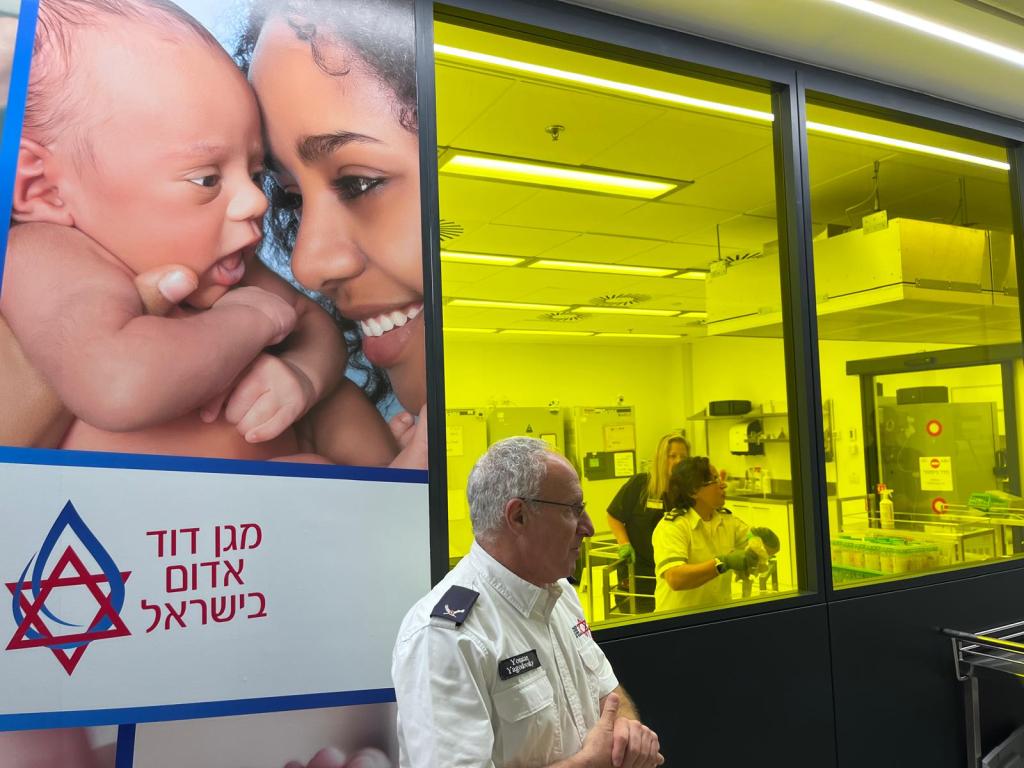
MDA eventually convinced the government it was a life-saving project for premature babies, and important for mothers whose milk wasn’t developed yet, or babies whose mothers were not available to nurse.
After October 7th, the demand for milk has shot up. A premature baby with a digestive system not fully formed drinks much less than a mature baby. But mothers who were called up to serve or were dead or hostages left mature babies behind needing a lot more milk.
MDA is also developing new processes for transplants and blood infusions that are saving more lives. Rather than always separating blood, they are providing unseparated O Blood with A or B that everyone can accept, and can have units with coagulating nutrients that help stop bleeding. Reducing patient deaths 14-16%.
They keep a tight relationship with ambulances so they can predict where in the country blood will be needed and deliver it quickly.
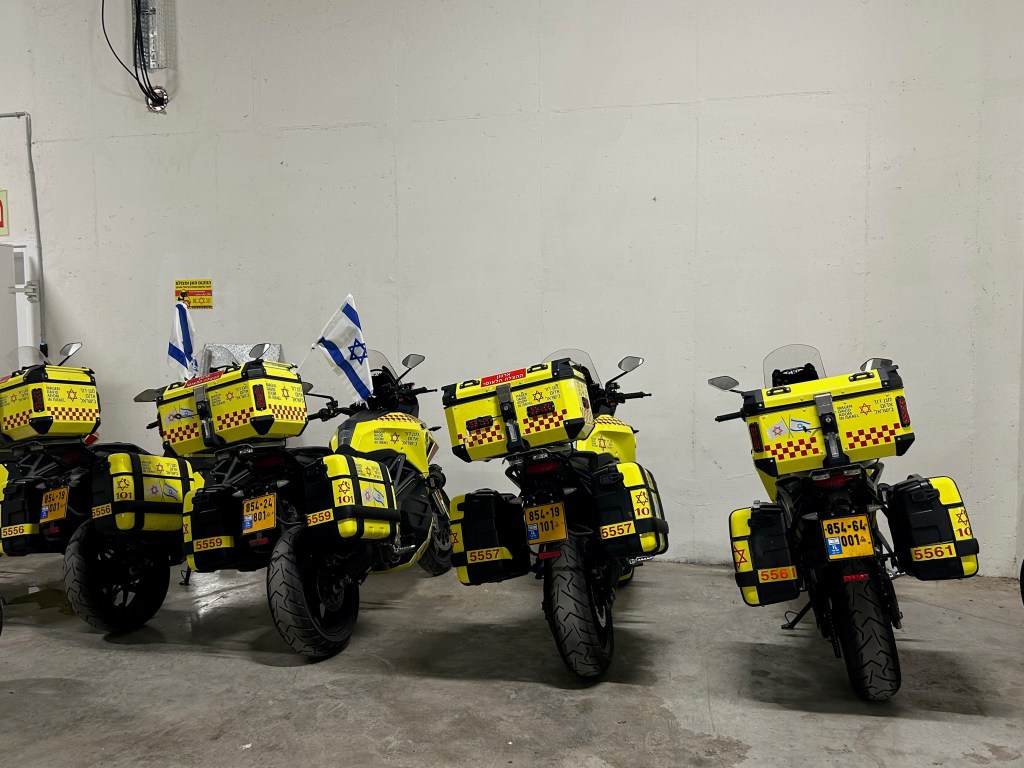
Magen David Adom and October 7th
During our “tour” one common question we have is, could people share their experience on October 7th? Talking with the national emergency response director is another level of complexity and heart ache.
“On October 7th, we were not ready for this type of hostility, but we were ready to respond.
Since it was a holiday, we had hundreds of people (employees and volunteers) at home and not at stations.
In two hours, 200 ambulances went to the south. At one clinic in Berit, after 7 hours of fighting, everyone in the clinic was murdered except a nurse hiding in a closet and a worker under a table.
Ambulances were targeted. Drivers were killed.”
“Our team members took so many risks trying to rescue people, especially from the NOVA festival site. People were dying on the phone with us. We set up temporary clinics in synagogues, in homes where people treated their neighbors. There was combat Monday and Tuesday with the army. It was horrible. I saw the worst of the worst in my life. We haven’t recovered and it will take us a long time to recover.”
Question we asked him: What has been the psychological treatment for staff?
We have specialists who work with us. We are still hearing new stories about the trauma. Not everyone has opened up. In the past, our dispatchers had typically received a request for an ambulance and sent it. They are not used to hearing people die in an attack on the phone.”
Next Visit: the offices of our hosts, the “tour guide” company J-2 (J-squared) in a shared work space to meet with a professor of hope.
His name is Oded Adomi Leshem.
He teaches at the Hebrew University in Jerusalem.
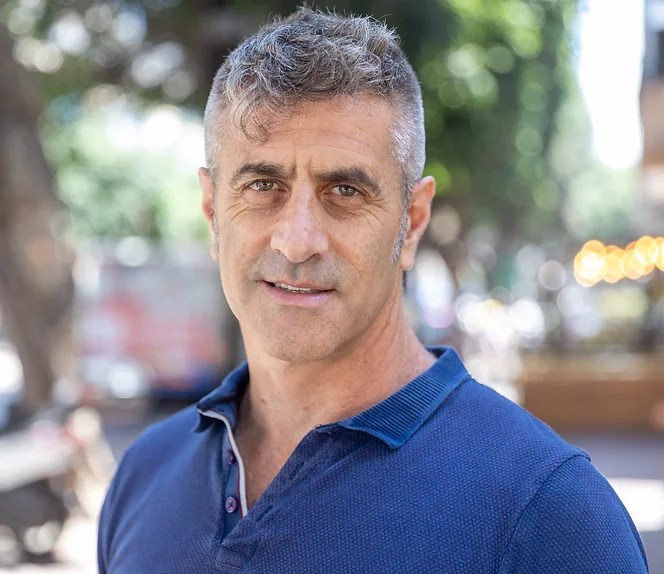
He had studied conflict in Cypress, and more recently studied Palestinian and Jewish Israeli conflict. He teaches in the department of psychology, but a lot of what he researches falls in political science.
First, he led us through an exercise by asking us “What is Hope?” How do we measure it? How does it function during conflict?
His theory is that hope becomes most relevant at the darkest times, during distrust and hardship. He drew a parallel to being sick: you hope to be well at the times when you are sick. The power of hope is the difference between a small light in a bright room vs. a dark room.
He asked us to draw hope, to put down on paper what it looks like. This was my drawing.
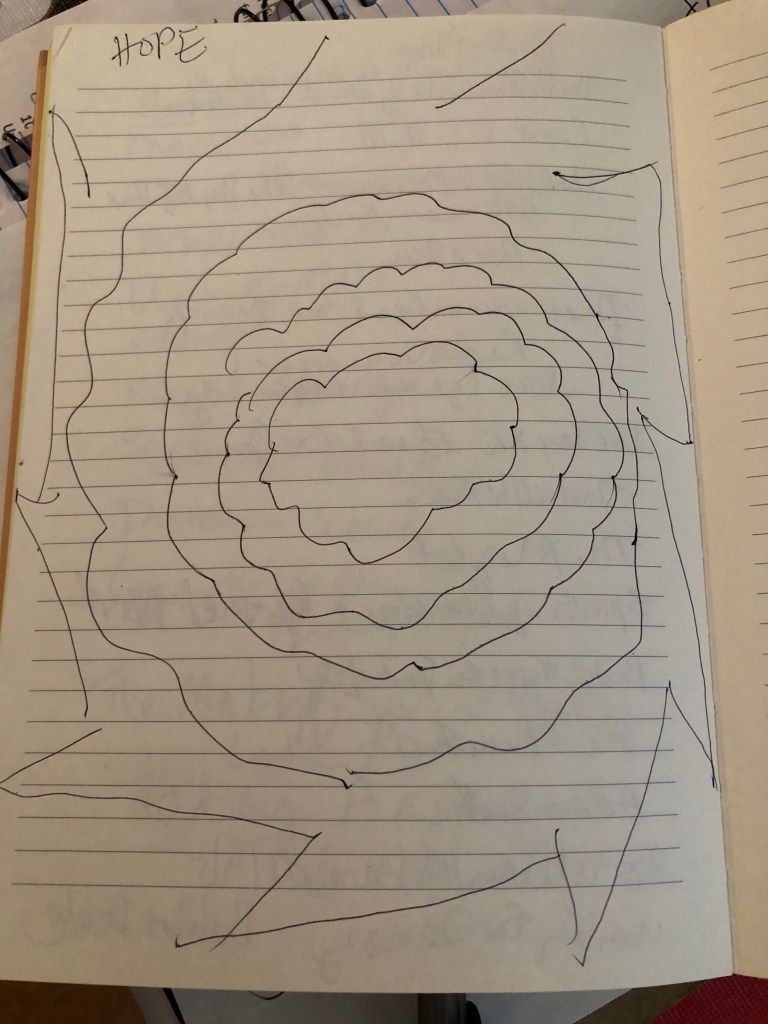
A circle that can create bigger circles, like a pebble thrown into a pond, yet with sharp edges surrounding it.
Notes from his presentation:
Oded has spent a lot of time researching what other people have theorized about hope…In times of uncertainty, when we can’t see the future…
- George Frederic Watts, 1886, discusses the merits and dangers of hope.
- Nietzsche observed that hope is anguish, especially when it is dashed.
- Spinoza claimed that hope is ignorance. We have a need to know, and hope without knowing the future is for the foolish.
- Fromm and Bar-Tal argue that hope is demanding, it requires a commitment and mental energy.
Oded concludes that hope has two important qualities: both hoping and accepting reality.
Western culture focuses on dreaming the impossible dream. Hope is for the impossible, against all odds. Other cultures don’t encourage hope.
However, Oded argues that humans can’t live without hope, that we have an existential need for hope. He talked about the power of hope in concentration camps, and that having hope was a predictor for survival. He talked about the death row effect: when there is no hope for survival, people commit suicide.
Human progress is driven by hope, keeping on against all odds until you are successful. People high on hope are more successful and live longer.
Given all of this research, one of his driving questions is “How can we exploit the benefits and avoid the drawbacks?”
What is common among the definitions? Across definitions of hope, he observes the following: Desire +Expectation/belief in fulfillment
This is one of the core principles of his research. A bi-dimensional construct. How to define and measure these two core elements of hope. Wish for peace on one axis and the expectation that you think peace is possible on the other.
Wishful thinking is exaggerating the possible. And when we don’t believe it’s possible, we stop wishing for it. Prolonged intergroup conflict LEADS TO Lack of Hope for Peace. The opposite of hope is fear.
Philosophers say that hope by definition is action-oriented. His work focuses on “The Hope Map Project”. He measures hope for peace in conflict zones around the world. Since the 1970s there has been conflict in Cypress. There hasn’t been a violent act since 1996, but refugees and tension.
In the Middle East, he has data from 2019.
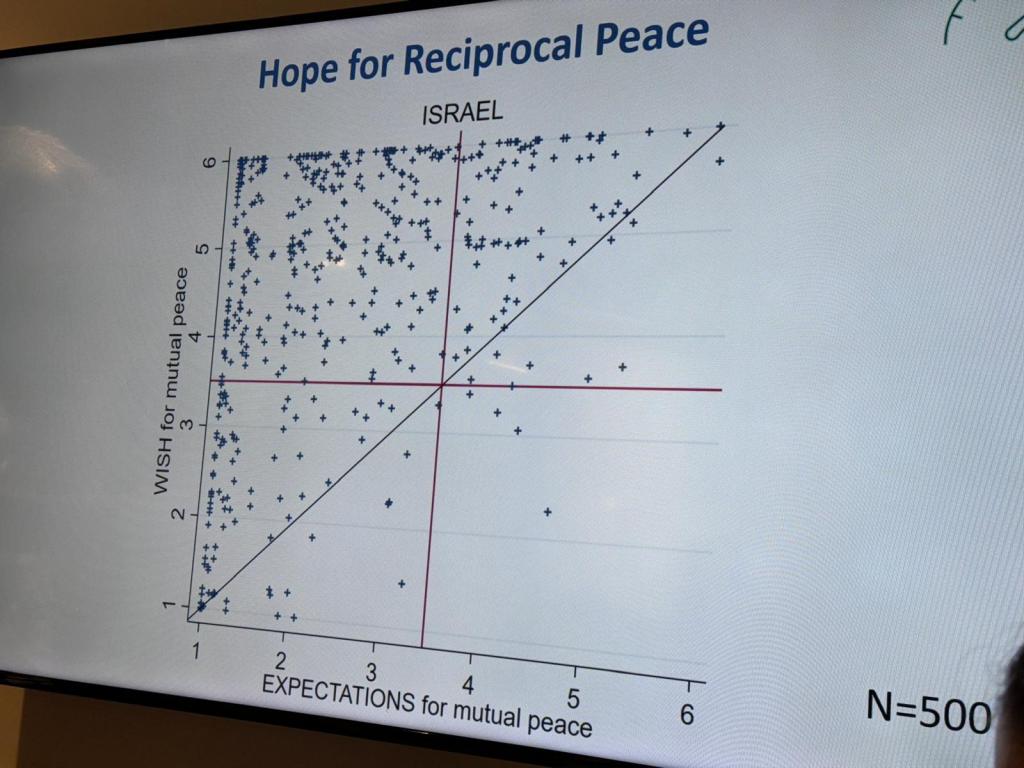
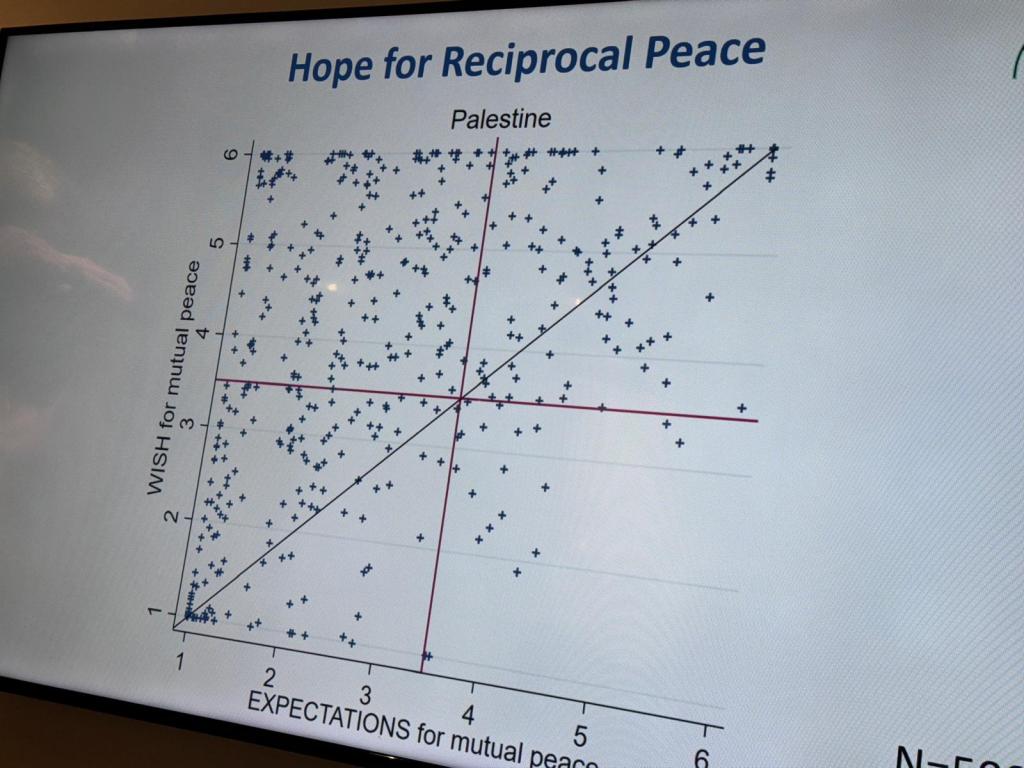
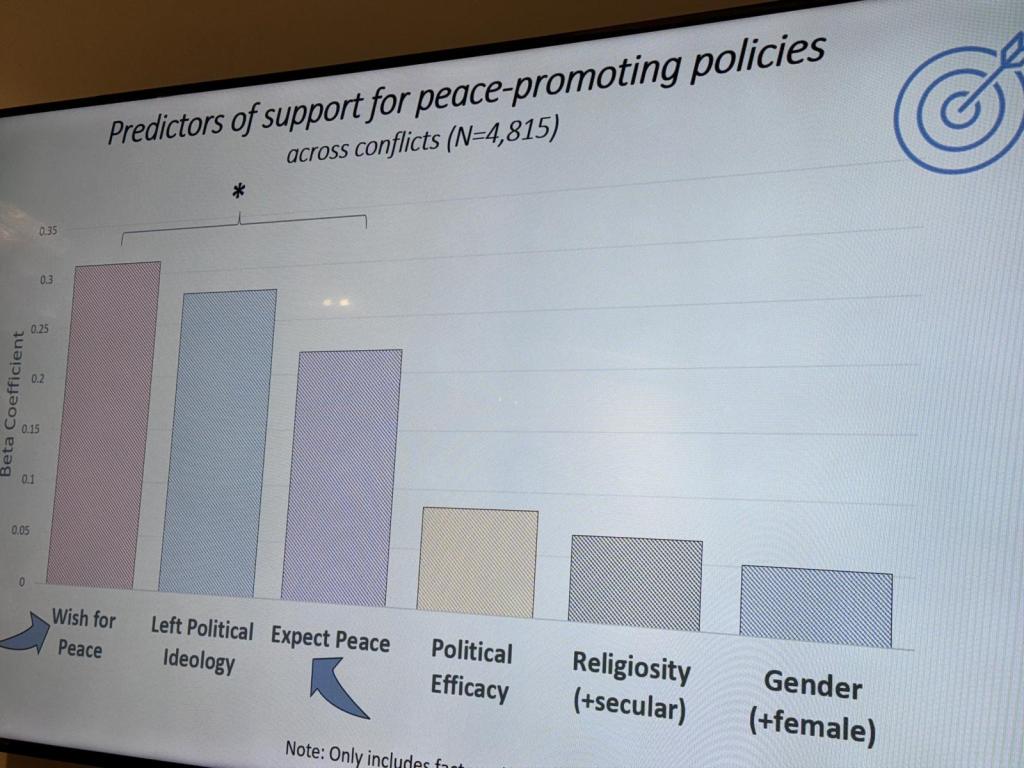
He has seen a decrease in the wish in both societies. Hope has been eroded by the current government.
From his book: “All else being equal, Palestinians’ and Israelis’ wish for peace is identical, but Palestinians had higher expectations that peace could be achieved.” His methodology enables us to explore which axis is more needed at a given moment: “We need to explore the role of each dimension as a predictor of attitude and behavioral change in support of peace and conflict resolution and then take this knowledge to design effective interventions. This bidimensional approach can inform whether it is more effective to increase the desirability of peace or the belief in its feasibility in promoting conciliatory attitudes among people involved in conflict.”
How his research is applicable to the future:
Knowing how to articulate what we want is as important as the plan to make it happen. And believing that the other “side” wants peace, that the other side hopes for peace, is very important.
Final stop of the night, Hostage Square. My next blog post will be all visual–photos and videos of the Square.

 A better future
Leave a reply to Sigrid Hepp-Dax Cancel reply