Setting the stage. Today is the last full day before we start prepping for the ride. We were invited to participate in an “East-West” guided tour of East Jerusalem. If you have read prior blog posts from 2024, my first time to Israel was bearing witness to communities in Israel impacted by the October 7th attack. We met primarily with Israeli Jews, but we also met with Bedouin Israelis and Dr. Tareq Abu-Hamed, the Palestinian Israeli director of the Arava Institute. I was taken with their story, and later decided to do this ride. If you go to the bottom of this blog, you can go back two posts and read the extensive blog of our last day with Tareq.
As promised, these are going to be daily short posts of our experiences. I will return to this blog in a few weeks and add more to each day, but my goal here and now is to share initial impressions and feelings, and reassure my mom that I’m alive and well every day.

See Mom? Here are a few of us waiting for the “tour bus” to pick us up and take us to East Jerusalem. So crash course–West Jerusalem =Jewish, East Jerusalem = Palestinian. But it’s so much more. Bethlehem, Palestinian, but of course still a Christian mecca a well. And West Jerusalem, the old city, has three quarters, Muslim, Christian and Jewish. And West Bank, Palestinian with contested Jewish settlements.
Me and Eliezer, below, the 76 year old Jewish journalist sharing the tour guiding with Tareq today. We are standing in front of an embassy that I believe Obama wanted to locate in the no man’s land between East and West Jerusalem. The placement of the Embassy, moving it from Tel Aviv to Jerusalem (Trump), Obama wanting it to reflect recognition of Palestine and Israel…it’s complicated. The wall blocks a view of the dead sea, and for security reasons they ended up having to place much of it underground. O, and the Jordanian army left land mines strewn about that have killed sheep and children, maiming adults, and causing much of the land to be uninhabitable.
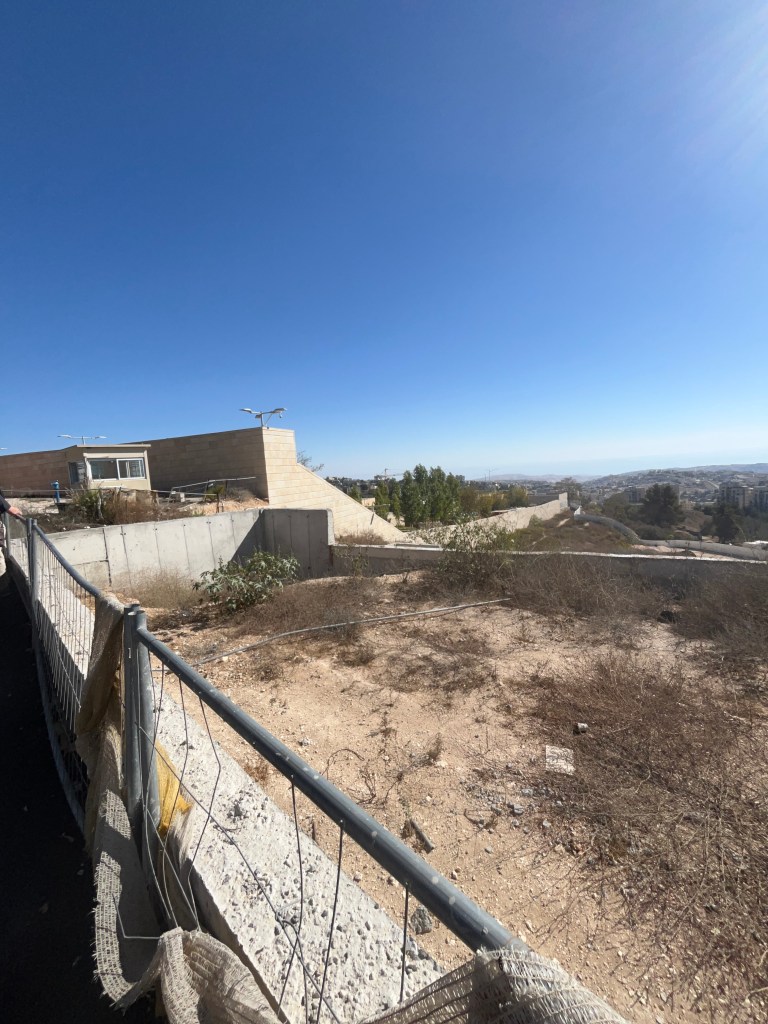
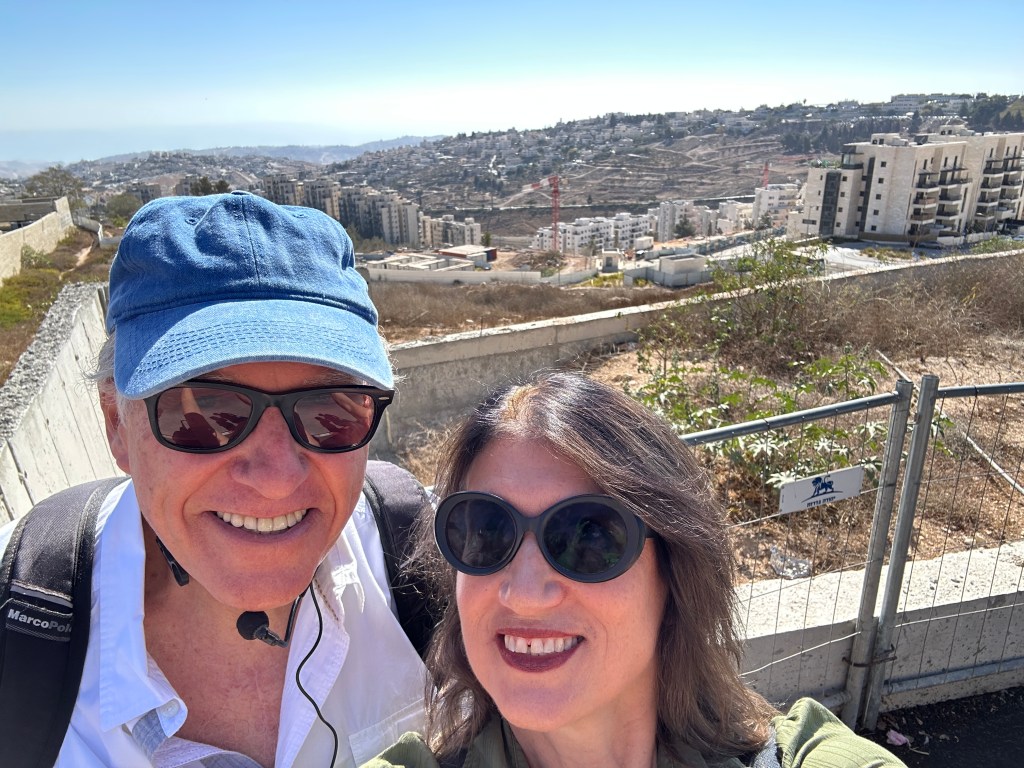
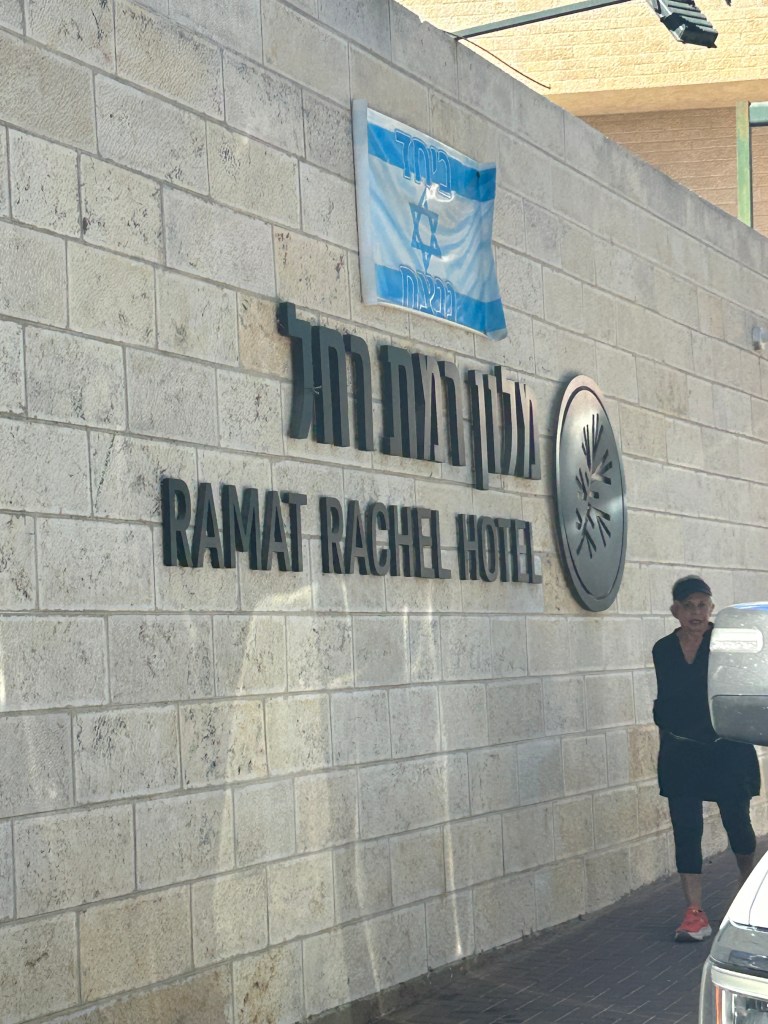
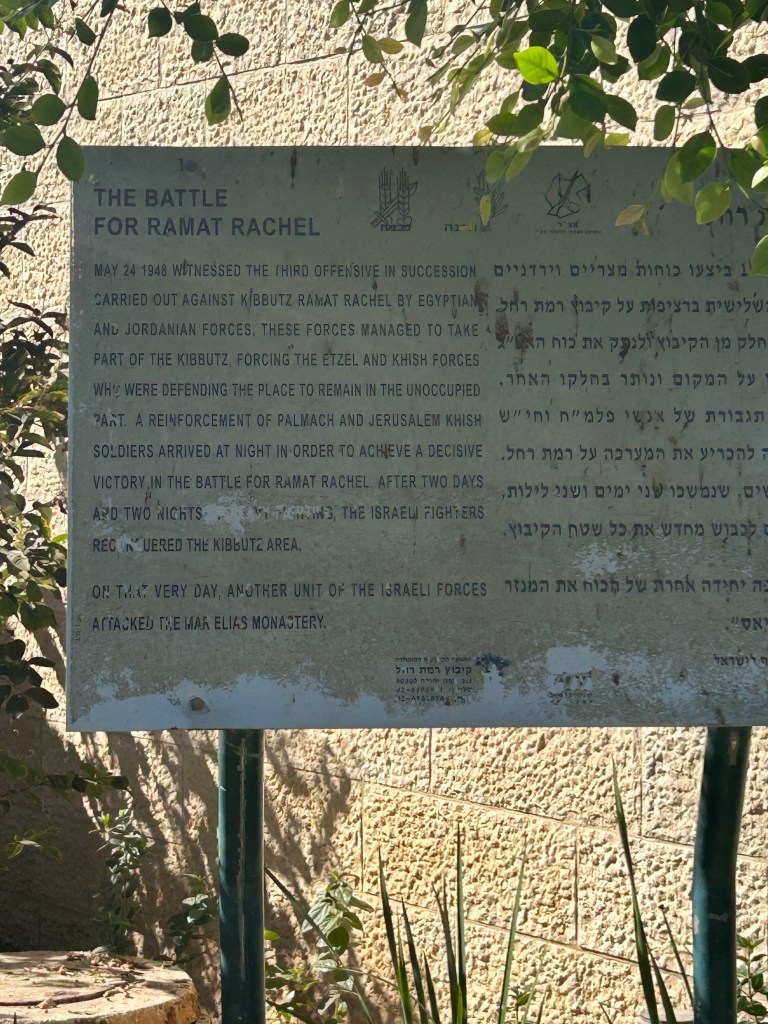
Next step, Kibbutz Ramat Rachel, an active Kibbutz with 250 residents, and 200 Palestinians working in service and farming to help the Kibbutz thrive. It’s complicated.
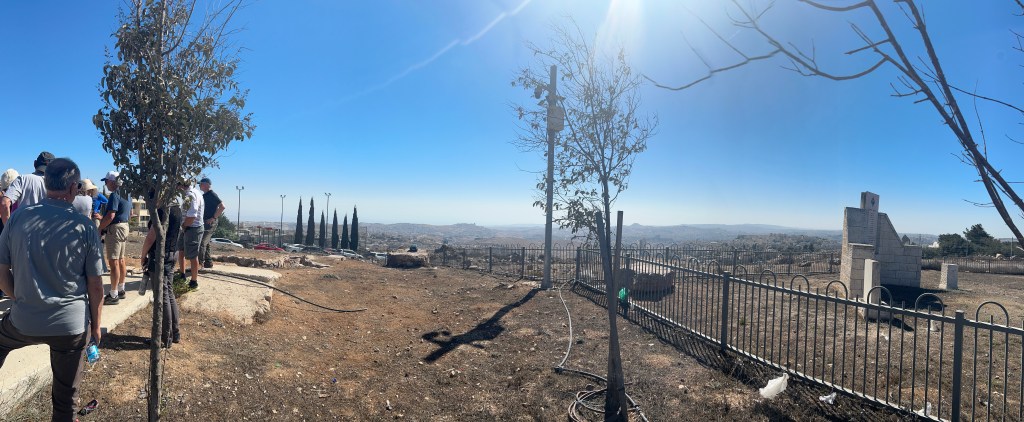
Peace park on the way to the next stop, the unmanned land. Since Eliezer had last been here, some government entity had put up this fence and locked the public out of the park. The three Olive Trees erected to peace were now closed off to the public. It’s complicated.
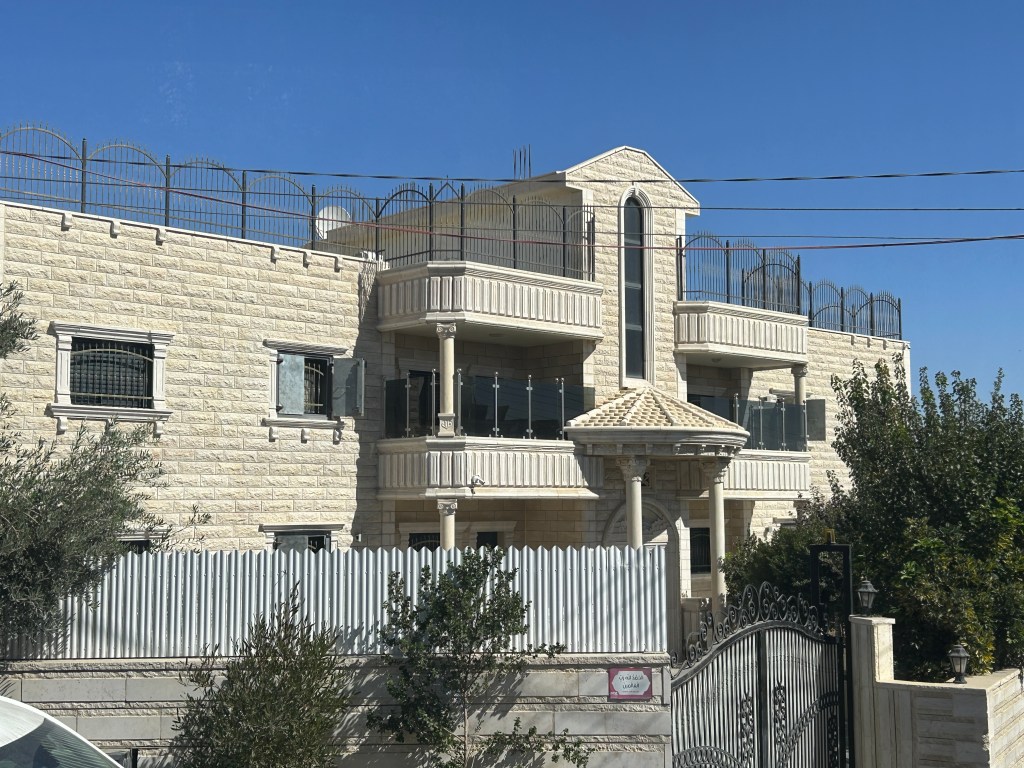
This is the house owned by a wealthy Palestinian who owns transit services, erected next to crumbling houses in an area with no garbage collection, public water or electricity, no zoning or building standards, and few public services like schools. It’s complicated.
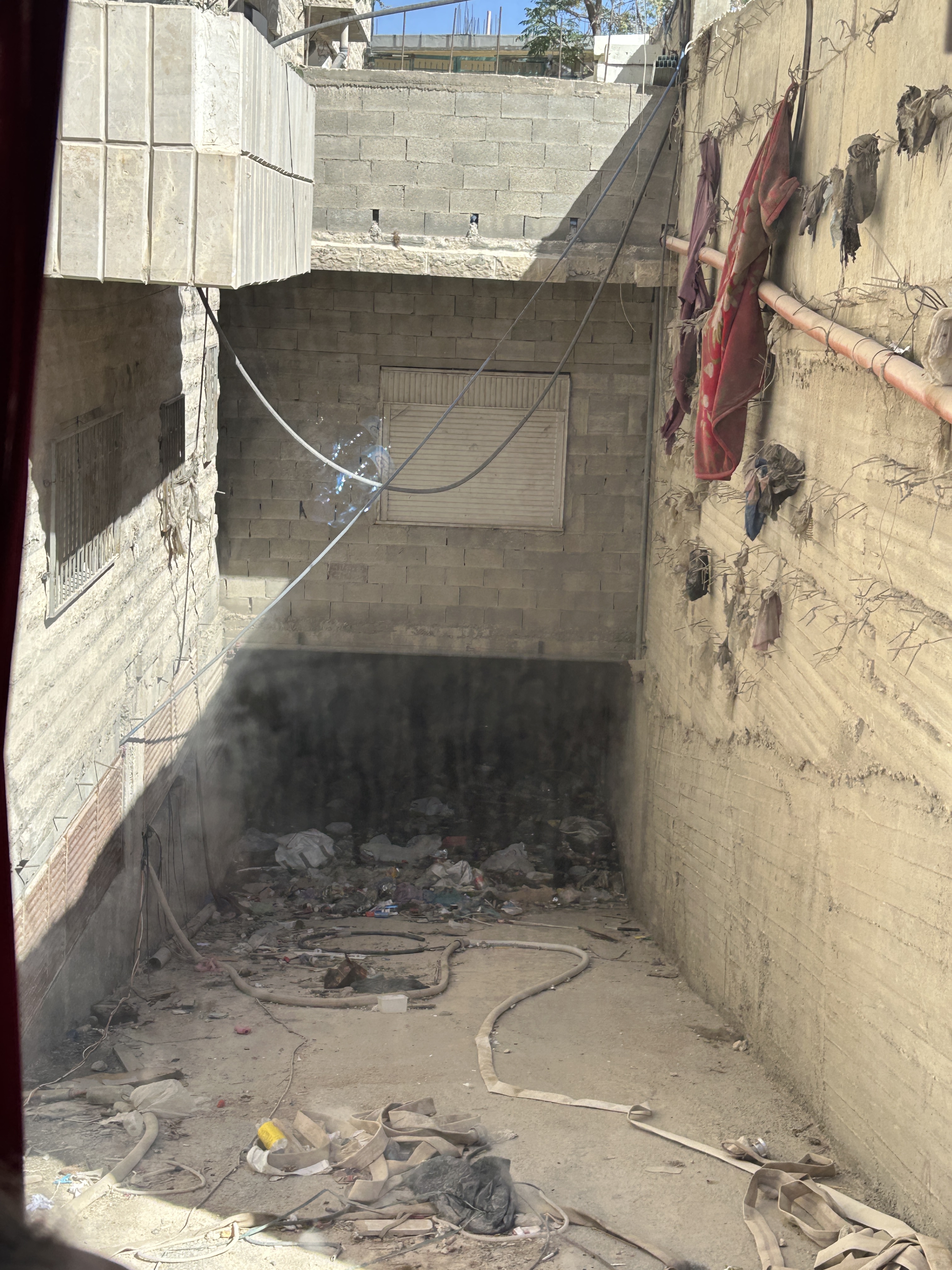
Raw sewage and garbage because there is nowhere else to put it and no public services. The roads are too narrow for garbage trucks to enter in many places, so people do take initiative and move the trash out of the community where it can be picked up.

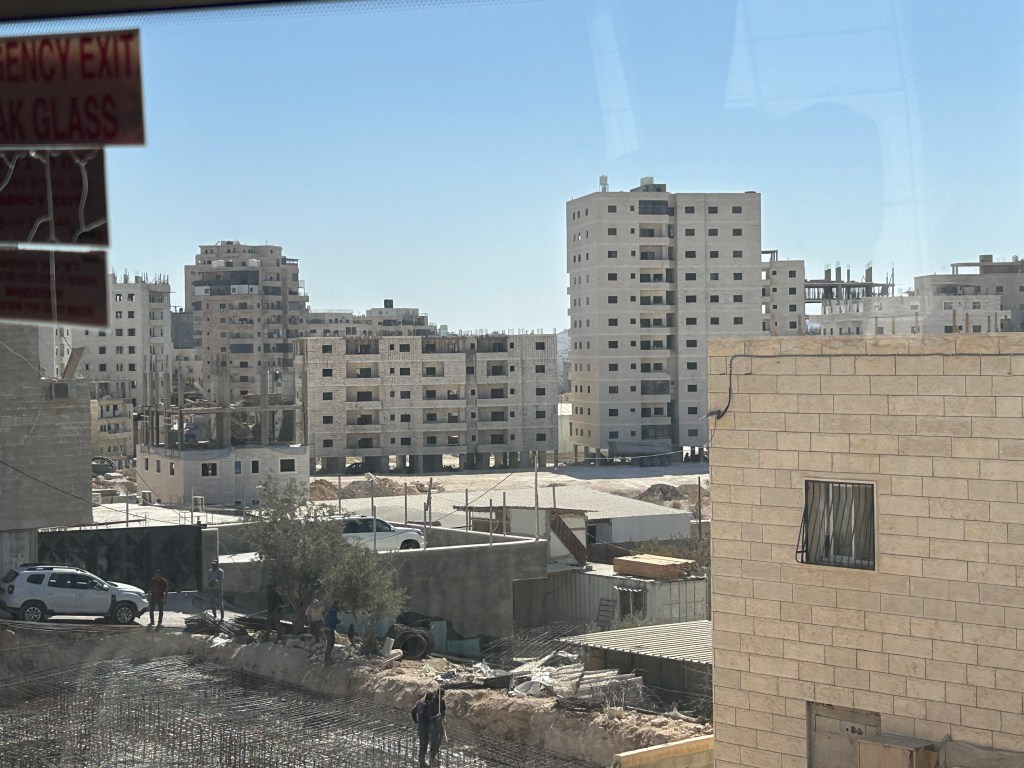
Those tall buildings on the right have been erected in “Wadid Al-Hummus”, with no zoning or building standards, who knows what will happen the next time there is an earthquake.
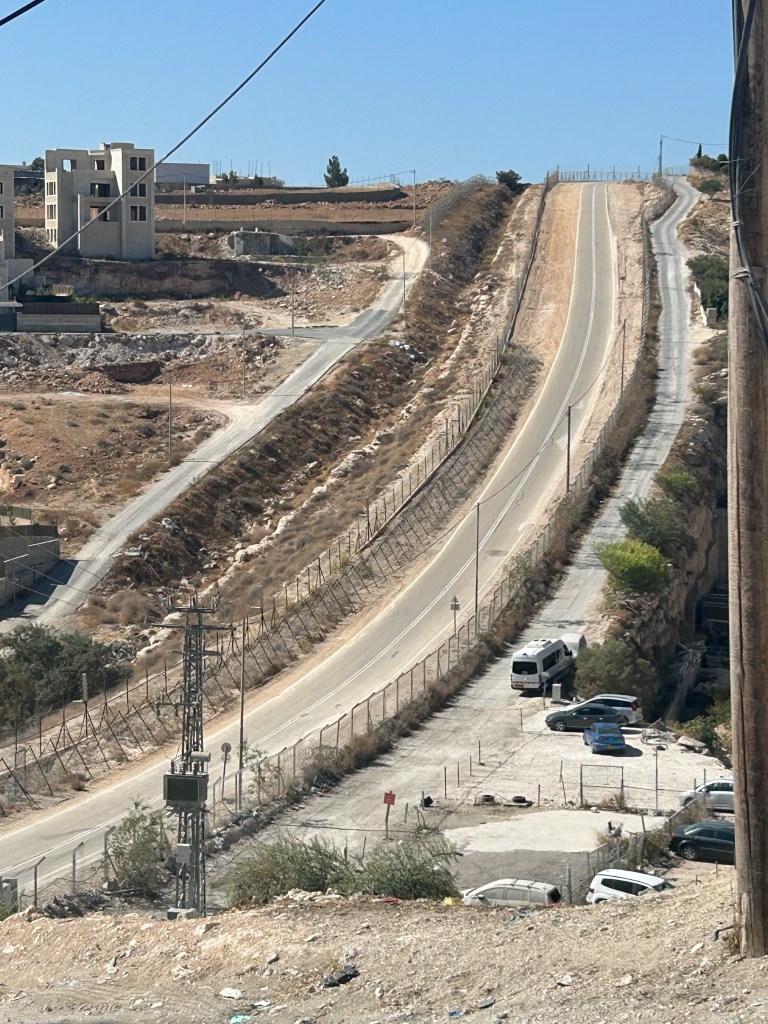
This is the fence between East and the West Bank, and the road with the white line in the middle is for army vehicles. It’s very hard to cross the border here. But it’s much more affordable and permissible to build a house on the West Bank side.
Tareq and Eliezer spoke quite a bit with us about the couple labor market factors, Arab speaking employees predominating in fields such as transit sectors, hospitality, some heath care fields, and construction. They also discussed how Arab speaking girls were starting to graduate schools at higher rats, partly because boys even without a college education could make money in jobs like driving and construction. The divorce rate for women is rising, but they reflected that in the longer term, increasing education rats among girls and women could translate to higher educational achievement for everyone.
They also spoke quite a bit about the need to improve education for everyone, but especially boys in East Jerusalem.
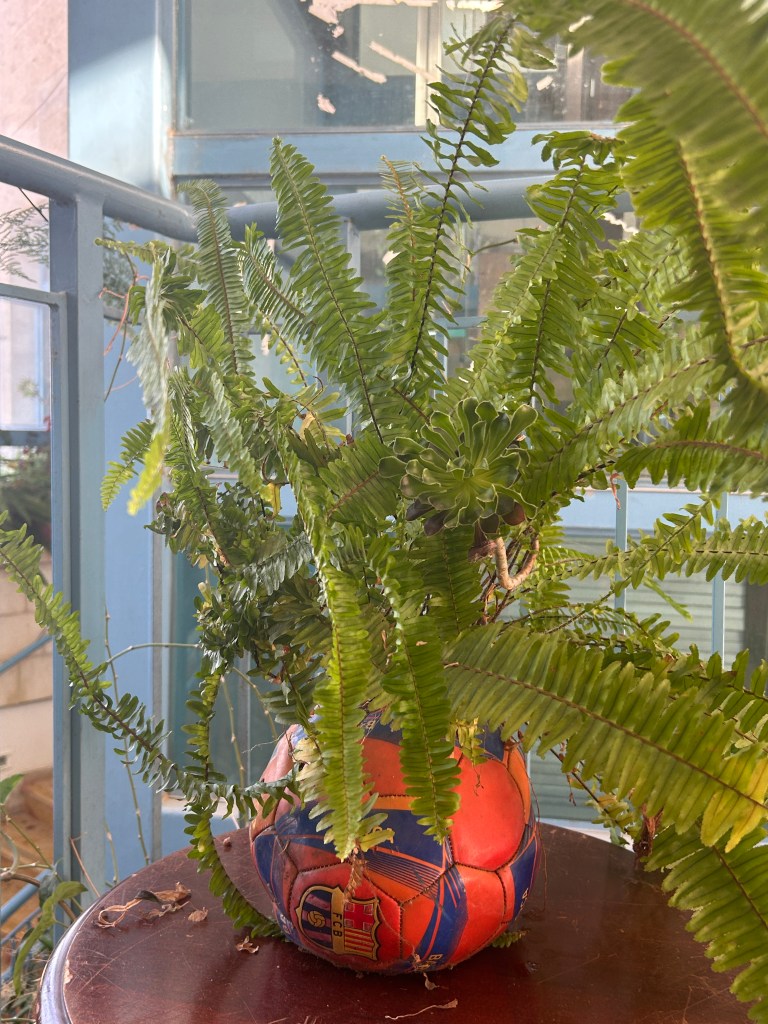
After passing through the area, we had lunch provided by Palestinian women at a local community center. I loved the plant brightening up the Center, including the innovative use of a soccer ball.
We heard stories today about how hard it is to be Palestinian with rights to work in Israel and travel outside, but not to vote in national elections. We learned about some of the implications, such as the unequal investment in education, infrastructure, parks and playgrounds. Only one playground for 70,000 people. I reflected on how challenging it is for Israeli Jews to navigate maintaining a Jewish state while providing access to education and jobs to Arab Israelis and Palestinians who soon could equal the population in Israel. And we thought about the environmental impact of all of this, and centered our minds in the journey ahead during which we will learn much more about the work of the Arava Institute in navigating these political and environmental challenges.
I did see two graphs with changing job trends I found interesting (for those who don’t know, I did study economics 100 years ago).
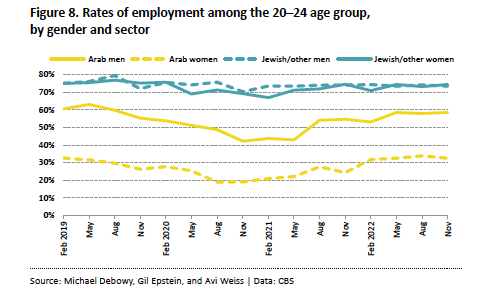
The first highlights the ongoing challenges for Arab women in the labor market.
The second shows graduation rates in higher education. However, this is for Israel overall. As I learn more about Jerusalem in particular, which may include non-Israeli citizens and tell a slightly different story, I will update.
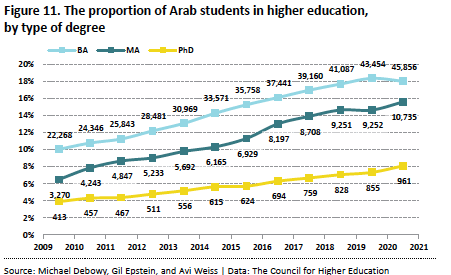
Source: The Labor Market in Israel: An Overview by Michael Debowy, Gil S. Epstein, and Avi Weiss
One more observation about the complex job situation in Israel–because of the war and the tragedy occurring in Gaza, and the way that the Israeli government is more severely limiting Palestinians living in Gaza from working in Israel, jobs in Israel are becoming more well paid (and I imagine as a result some costs are rising, but we focused mainly on the incredibly high cost of housing and the pressures that put on accepting ore precarious housing). End of statistical deviation.
On a personal note, I found out that day two of our ride is going to be 69 miles. I have been telling people it’s an average of 50 miles a day for the “middle group” I have chosen to join. Jackie and my longest ride has been 44 miles. So I had a minor freak out but my compadre is helping me take one day at a time and worry about that in three days. And I haven’t even begun to stress about the elevation we will have to climb, nothing like my flat training rides in Chicago.
This afternoon we took a break and went to the Yehuda market, surrounding ourselves in fruit, spices, Judaica, jewelry and art.
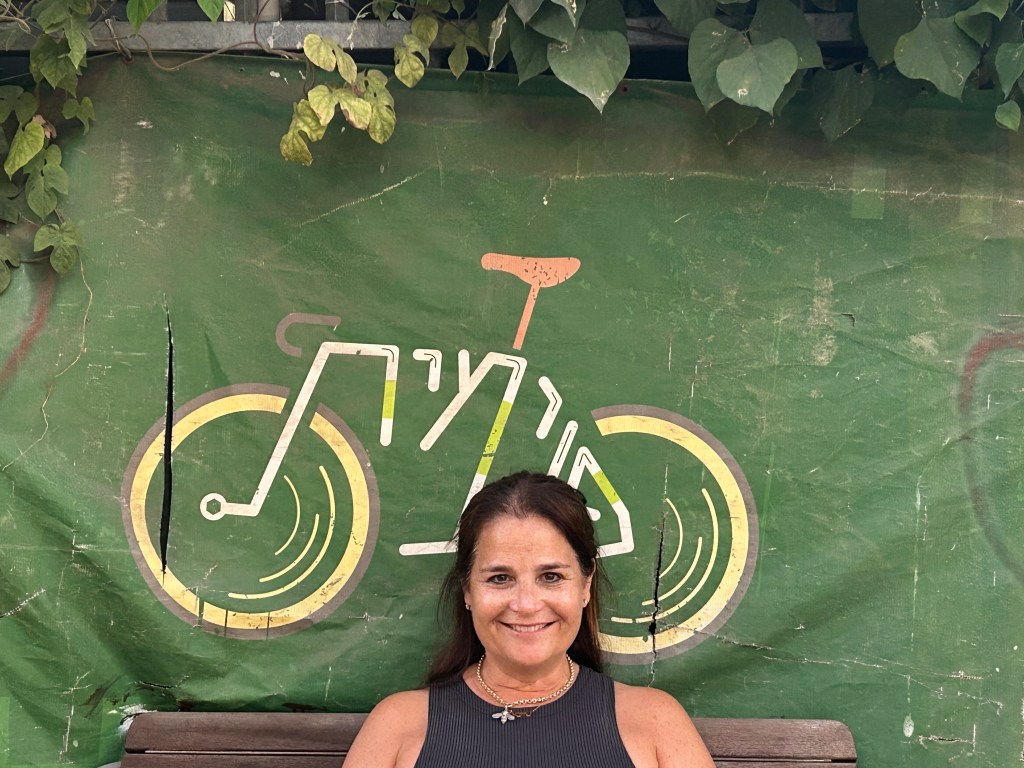
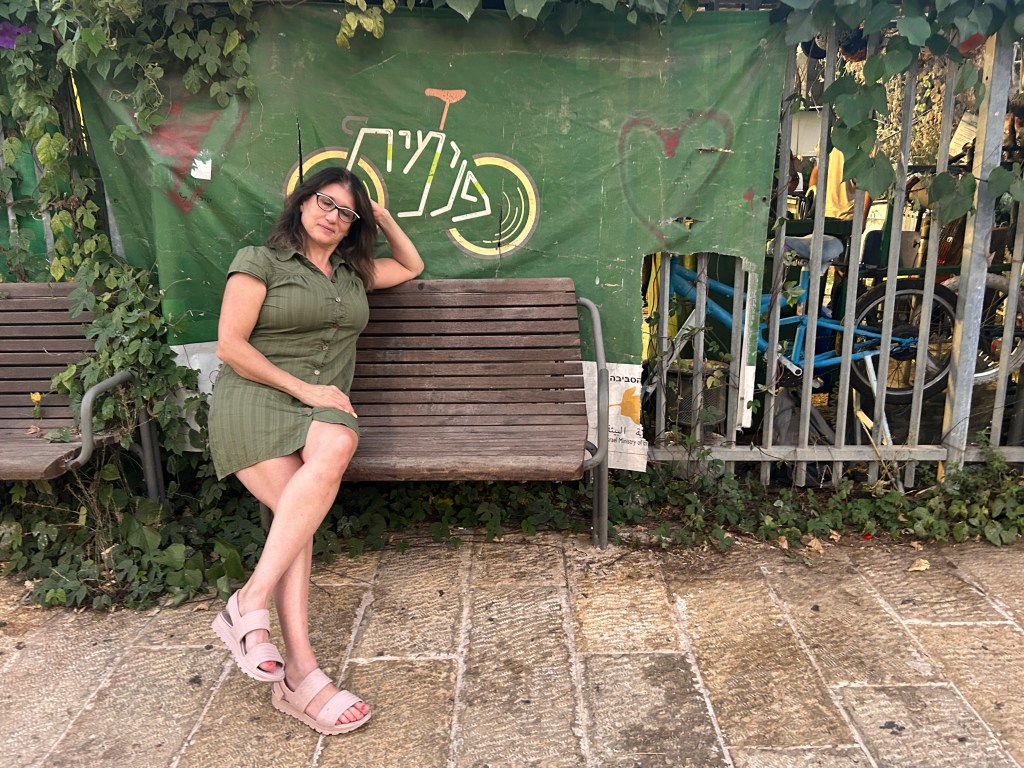
On our walk home, we happened by a bike workshop and wandered in. The first thing that drew our attention was this mural on the wall, reminding us of the trauma and crisis of the Israeli and international Jewish community that will take decades to heal.
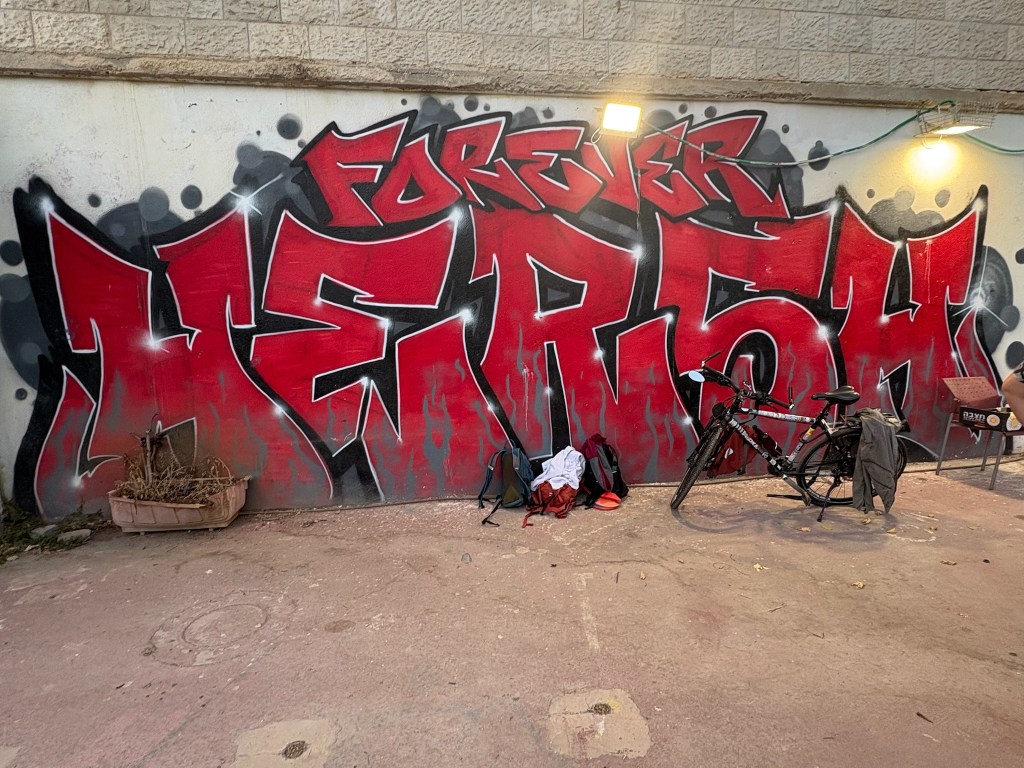
It says “Forever Hersh”. Hersh Goldberg-Polin was one of the hostages killed in captivity with Chicago ties.
https://edition.cnn.com/2024/09/01/middleeast/israel-gaza-hostage-polin-goldberg-profile-intl-hnk
We also found out that the folks at this bike workshop will be assembling our bikes tomorrow. Small world in so many ways, constant reminders of how intertwined our lives are, tragic and comforting.
We are so lucky to have each other, to have all of your love and support, to be part of this adventure raising money for Arava and learning every day how complex the situation is and how many more stories we want to hear to try to make sense of it and have a positive impact, to ally ourselves with the millions of people here who want peace.


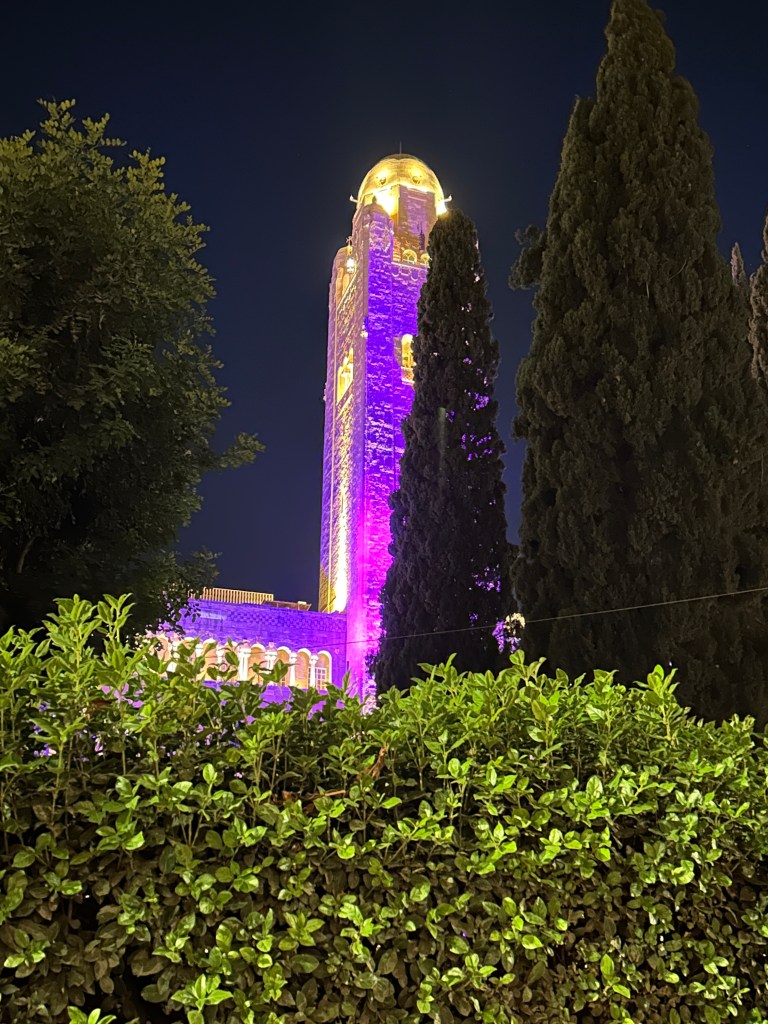
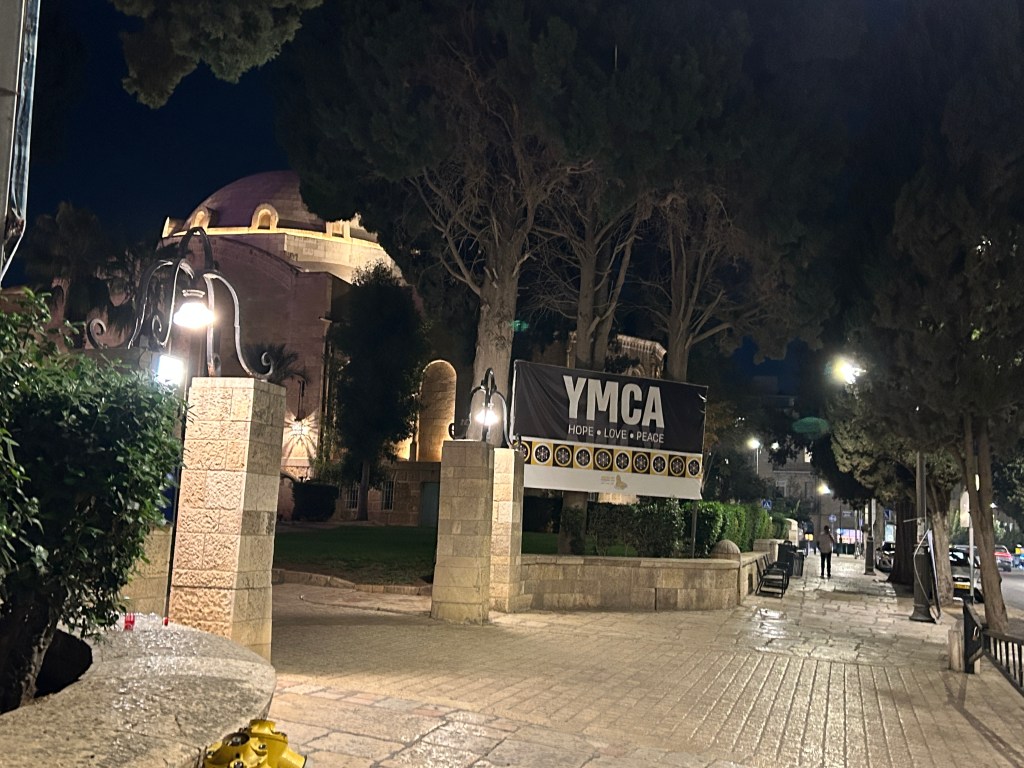
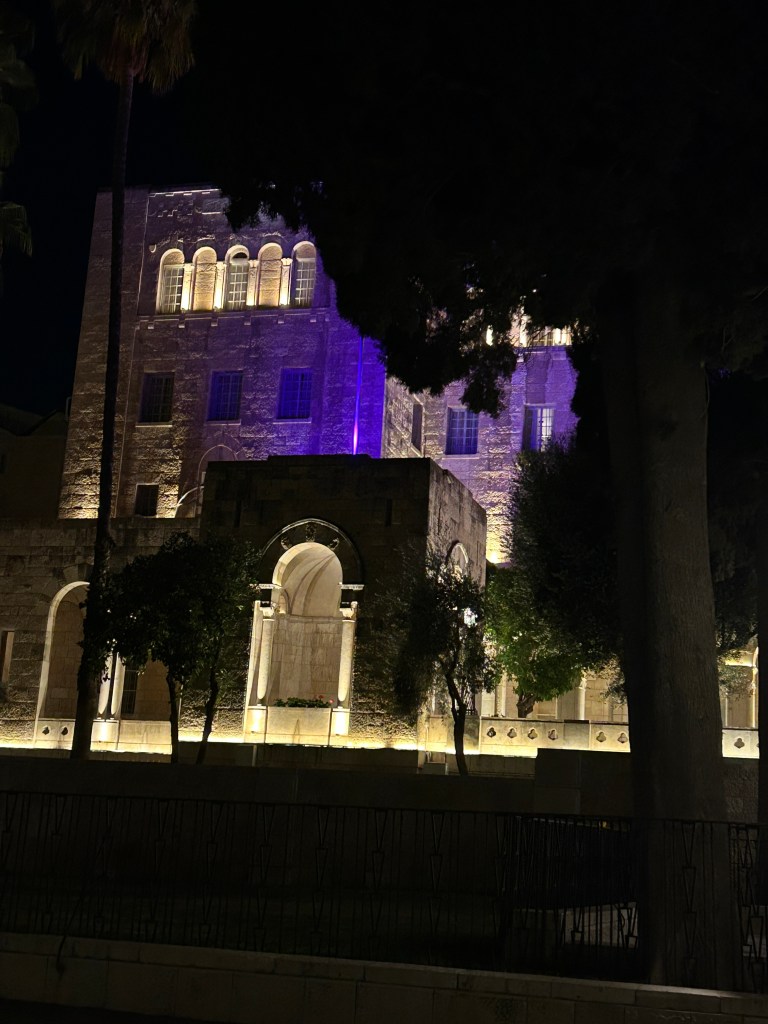
Last activity of the day, I hit the gym for a workout class. Need to keep the core and arms strong while planning to decimate my legs. Staying at the YMCA Arches in Jerusalem has its perks. Here is our hotel at night. Much love, Sarah and Jackie

 A better future
Leave a comment