Rahat
The title of today from the initial tour was “Bearing Witness”.
Thus, our fourth conversation of the day was again focused in part on another community’s experience during October 7th and before and after. This afternoon we are hearing from a community leader that works with some of the poorest Israelis in the country.
Our Bedouin host in Rahat told us he had not had contact with Chicagoans before October. He lives in Tel Sheva, the first planned Bedouin town. Bedouins are a wandering people, and “planned” towns are relatively new. His town was established in 1968, and then Rahat and others were established.
He was the oldest of 21 brothers and sisters, 3 mothers.
He trained as a social worker. He had gotten a scholarship from Ben Gurion and went to Canada to do his masters. He worked in social services for 20 years before being recruited to help run AJEEC.
AJEEC-NISPED (Arab-Jewish Center for Empowerment, Equality, and Cooperation – Negev Institute for Strategies of Peace and Economic Development) is an Arab-Jewish organization for social change that was established in the Negev in 2000. The organization is made up of a joint team of Arabs and Jews who work together to create an equal, shared society, which allows Arabs and Jews to coexist while preserving their identity and culture.
He was co-directing AJEEC with Vivian Silver, a peace activist, until she was murdered on October 7. She was 74 years old. Her son is active in supporting peace and a cease fire and to bring hostages home.
[Note I put in italics the quotes from our host]
AJEEC is the largest Arab-Jewish organization in the state. “On Oct 7 unfortunately we realized “it” [the crisis, the problem , the tension, so much “It” stands for here] was bigger and much more was needed than we were providing.”
AJEEC employs 160 people, and coordinates 1,500 volunteers.
“After October 7th, we knew we would have a huge responsibility.”
“But we always operate with the Concept here of the Seventh Neighbor: You are responsible for your neighbors up to the seventh neighbor away as if it were your own house.”
“We work with the government, but we are not a government organization. We envision ourselves as identifying needs and then bringing them to the government to provide resources to address the needs.”
In the past, my perspective was to look at the Bedouin community and see how their settlements are viewed as unrecognized, and in need of social services. So when I started, I began thinking about how we could bring resources to our community.
For example, during the Corona virus, we opened an operational ER and got all of the aid groups around the table. Back then, we had a shared enemy, which was COVID. This enabled us to build some structure.
On October 7th the Bedouin community was hit hard on Day 1. Twenty people were kidnapped, and the first people killed were Bedouin. This was because they were at work in the fields. Thank G-d it was a Saturday–Shabbat–and not a lot of people were at work. It could have been a much larger catastrophe.
Many Bedouin people heard what was happening and jumped in their cars and started driving to save lives. Some lost their lives doing it. A person saved a mother and child and lost her/his life. We were trying to demonstrate that we were supporting the Jewish community. A lot of Bedouins work in Israeli hospitals: 40% of people working in the hospital are Bedouins. They worked 24 hour shifts after the attacks but still felt unsafe. [Presumably because the Jewish Israelis taken to hospitals were mistrustful of Arab Israelis…]
The atmosphere here was very tense between Bedouins and Jews before this happened. This changed the atmosphere and helped attract more Jews to get involved.
Our work started Saturday night. We were worried about Arab Israelis. We got buses and helped Palestinian students from universities to get home. We were also exposed to the fact that Bedouin homes don’t have bomb shelters.
We started raising money for mobile shelters for the “unrecognized towns”. 11,000 families, raised money for 1,000 units, still woefully short of what is needed.
Most people became unemployed in a day. Those who had worked in agriculture jobs or hourly jobs. Everything was closed and we knew Bedouin kids were going to suffer because they were losing access to school-for example, they had gotten hot meals at school. We provided 50,000 hot meals a day to schools. We built a tent and got donations of food. We were amazed that donations came from the Jewish community.
Different organizations provided support, for example, Brothers and Sisters in Arms:
“The Brothers and Sisters in Arms organization was created by reserve soldiers last year to protest the government’s attempts to reform the judicial system by weakening the courts. Many of its founders hold senior ranks, served in elite units, and have impressive post-army CVs.”
We started approaching partners like the Chicago Jewish Federation, we started meeting groups from Europe and the US almost daily.
We were very surprised.
This government was calling us dangerous to Israeli society.
Here is what we see as dangerous to society: we see a problem of gun violence and illegal guns in our Arabic community. There were hundreds of gun deaths in the last year. The minister of war gave out over 100,000 gun permits last year. Two groups heavily armed under mass tension is dangerous.
We also are seeing a huge problem of fake news. Fake news is saying that Bedouins are celebrating Jewish death with fireworks, posting videos. In reality, these videos are fireworks from weddings. Some well funded groups who don’t want Arabs and Jews in Israel to get along are behind the fake news. They took photos of mayors and social workers, putting them on Hamas Flags and saying to the Jews these people are criminals/terrorists and should be killed.
“Our vision for the future: Shared Space”
We want to start more training of young leaders on the concept of “Shared Space”.
We started a project to create regional councils in Bedouin towns to encourage municipalities to plan a year of joint activities with Arabs and Jews. These are the list of activities we envision and we will be kicking off this project next month:
- School activities – could be environmental, learning English, etc.
- Art
- Tourism
- Business Partnerships
For example, transforming sewage wadis into recreational parks.
Every year, 7,000 of our kids will reach 17-18 years old, and only 10% are able to access higher education. Of those, 70% are girls.
Education systems here are separate. For school projects like Hand in Hand, which is bringing together Arab and Jewish kids in Israel, there is a huge waiting list for Arab children. https://www.handinhandk12.org
We are also opening a sports recreational center for girls. Right now 50% of women over 40 are at risk of diabetes. Four months ago we opened a culturally sensitive sports center for girls.
Example of a project which was failing in a Bedouin community before I got involved:
Ambulance driving. This was an 8 year program. There was an argument against the program because people complained that most of the names/addresses were impossible to find without a lot of “official addresses”. We solved the problem by recruiting Bedouin drivers from the local community.
AJEEC started a movement, now there are 9,000 kids involved. Our vision is for a youth group-movement, but to be an official organization with funding you need to be sponsored by the government and have a national presence. We started by linking to Haridi groups and used that argument to get investments. Our long-term dream is to connect to the Scouts.
Another pilot project we have is based on the “Gap Year’ in Israel, a year many youth participate in programs before going into the army. We pair up people to work in Bedouin and Jewish schools.
From the website: “AJEEC’s gap year programs have different tracks, each with a different emphasis: “Taliyah” (“Pioneering”) – focused on volunteering in the community with a gender lens; “Sabeel Leadership Institute” – focused on developing youth leadership; “Arab-Jewish Gap Year” – a joint program for Arab and Jewish youth, the latter made up of Scouts national service participants; and “BridgeTech” – focusing on preparation for studies and employment in STEM fields. This year, for the first time, another gap year was opened called, “Alrazi”, which focuses on training for the study of health professions.”
We need to look for more ways to change this reality, not just to maintain the status quo. We need politicians to better understand that Shared Space isn’t political, not that one group will win and one will lose. Shared Space is a strategic way of creating a win-win.
We are looking to create 3 community centers for “Shared Spaces” across the country, all named for Vivian Silva.
Examples of community and shared celebrations:
We created Ramadan Nights here, with participation from hundreds of Jewish families. We were surprised at how many Jewish families still participated this year. [Note, I believe Ramadan nights is a national event that has been going on for years, but I think it was canceled in many regions this year. So it’s even more noteworthy that it continued in the Bedouin community in collaboration with AJEEC.]
Final story on how he describes the Bedouin perspective on living in Israel.
“Bedouins don’t have dual citizenship even though 50% of Jews do. We don’t have anywhere else to go”. The only person injured during Iran’s airstrikes was a Bedouin girl. [Remember the airstrikes? When my flight was canceled the week before this trip?]
There is a big problem of linking Palestinians to Hamas in the United States. This doesn’t help Palestinians but it REALLY doesn’t help Bedouins. It’s not to say that we don’t feel terrible for women and children in Gaza as a human being and a social worker, but that doesn’t mean you are associating with Hamas.
A military governor during the 1950s asked to speak with “an educated Bedouin”. His grandfather was the Bedouin the governor spoke with. He asked his grandfather about the future of Bedouin-Israeli relations. “My grandfather said he was afraid he would hurt him if he spoke honestly. He promised he wouldn’t.”
Bedouins have a lot of stories about a 4-eyed dog. We hate these dogs because we don’t know where to look.
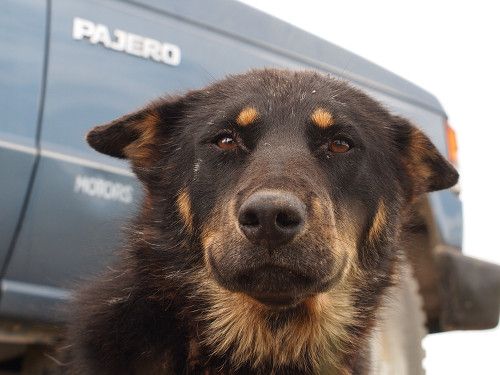
(the idea is that if they have four-eyes, you don’t know which are the spots and which are the real eyes.)
If Israel gives young Bedouins a path and a hope for the future, it would satisfy them. If they shut them out, they would see them as the 4-eyed dog. The fact that the state of Israel left Bedouins out created space for right-wing movements like the Islamic Movement.
The Islamic Movement used poverty to build support–50% of all families are under the poverty line, highest unemployment, and criminal groups like gangs flourish.
If anyone would like to donate, here is a link to AJEEC’s home page and there is a “Support Us” button on the top left.
At the end of our conversation, we were asking him questions. But the organizer in me has trouble spending 2 hours with someone and only peppering him with questions. I wanted to give him a chance to ask us questions–if he so chose. One-way communication, with us absorbing and the other person offering, feels strange to me. I know that people continue to appreciate us being there to witness and to learn, but I also feel as a sign of respect I want to give people space to ask us questions if they so choose.
Guess what his question is? What do you think of the protests on college campuses? We’re still turning over this issue in our group and wrestling with how to support and respond.
Dinner/Evening
I honestly don’t even know what I did for dinner. Likely back to my room, maybe the gym, probably skipped out on the group to spend some time alone. One night I started watching the movie Golda, which ended up just confusing me even more. This was one of the most intense, meaninful and exhausting days of my life.
 A better future
Leave a comment